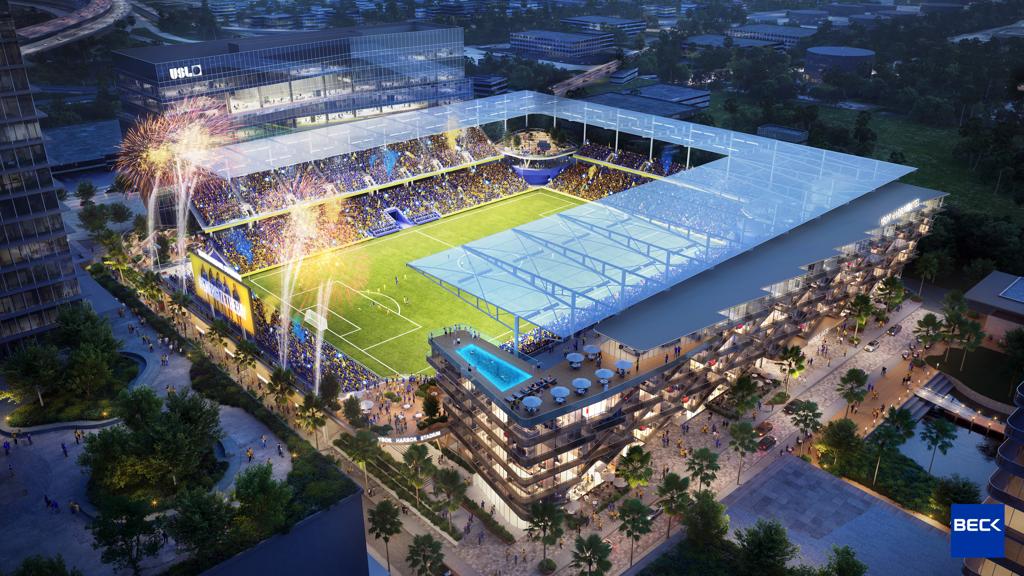
The announcement from Tampa Bay Sun FC outlining plans for a new waterfront stadium at Ybor Harbor is more than a facility update. It is a signal of where the professional women's game is heading from an infrastructure, investment, and market positioning standpoint.
This is not simply about building a stadium. It is about anchoring a long-term sports and real estate ecosystem around a women's professional club.
A Strategic Shift in Women's Soccer Investment
For decades, women's soccer infrastructure has largely been reactive. Shared venues, retrofitted facilities, and short-term solutions have defined the landscape.
This project suggests a shift toward purpose-built environments for women's teams, integration into mixed-use, high-growth urban districts, and long-term asset creation rather than short-term tenancy.
By placing a stadium at the center of a waterfront development, Tampa Bay is aligning the club with one of the most valuable trends in global sports: real estate-driven club economics.
Why Waterfront and Why Now
Waterfront developments are among the most premium real estate plays in North America. Positioning a stadium in that environment does three things: it elevates the brand positioning of the club immediately, creates year-round activation opportunities beyond match days, and attracts a different class of investor, partner, and sponsor.
For a club competing in the USL Super League, this is a deliberate move to operate at a higher commercial standard from day one.
The Mixed-Use Playbook Is Now Standard
The most important takeaway is not the stadium itself. It is the surrounding vision.
Modern clubs are no longer standalone sports entities. They are real estate anchors, content engines, and community infrastructure platforms.
By embedding the stadium within Ybor Harbor's broader development, Tampa Bay Sun FC is aligning with the same strategic model seen across leading global projects - stadium plus residential, stadium plus retail and hospitality, stadium plus public space and entertainment.
This approach diversifies revenue, reduces reliance on match day income, and increases long-term asset value.
Implications for USL and Expansion Markets
This announcement reinforces a broader trend across the United Soccer League ecosystem.
Clubs are no longer being evaluated solely on market size or fan demand. Increasingly, they are being judged on ability to secure land and development partnerships, alignment with city-led growth initiatives, and capacity to deliver mixed-use value.
For investors and operators, this changes the entry criteria.
Winning a market is no longer about launching a team. It is about controlling or integrating into a broader development narrative.
A New Benchmark for Women's Clubs
What stands out most is the positioning of a women's team at the center of a major infrastructure project.
This challenges outdated assumptions around revenue ceilings in women's sports, facility investment thresholds, and commercial viability at scale.
Instead, it signals confidence in long-term media growth, sponsorship expansion, and community-driven attendance models.
If executed correctly, this project becomes a proof of concept for future women's soccer developments across North America.
What Investors Should Watch Closely
This project is still in its vision phase, but several key variables will determine its success: public and private capital structure, development timelines and phasing, stadium capacity and scalability, anchor tenants and surrounding commercial mix, and city alignment and infrastructure support.
These are the same variables that define successful soccer developments globally.
The Bigger Picture
Tampa Bay Sun FC is not just building a stadium. It is positioning itself within a long-term asset strategy that blends sport, real estate, and community development.
That is where the next generation of soccer clubs will be built.
And increasingly, that includes the women's game leading from the front.
Free Industry Report
2026 USL Championship Attendance: Down 7.5%
The USL Championship average fell to 5,148 per match while MLS and USL League One grew. We checked every club figure and found venue control, not market size, predicts crowds.
Read the Report