Stadiums
Hearts of Pine's Cassidy Point Plan Is a Demand Story. The Financing Story Is Still Missing.
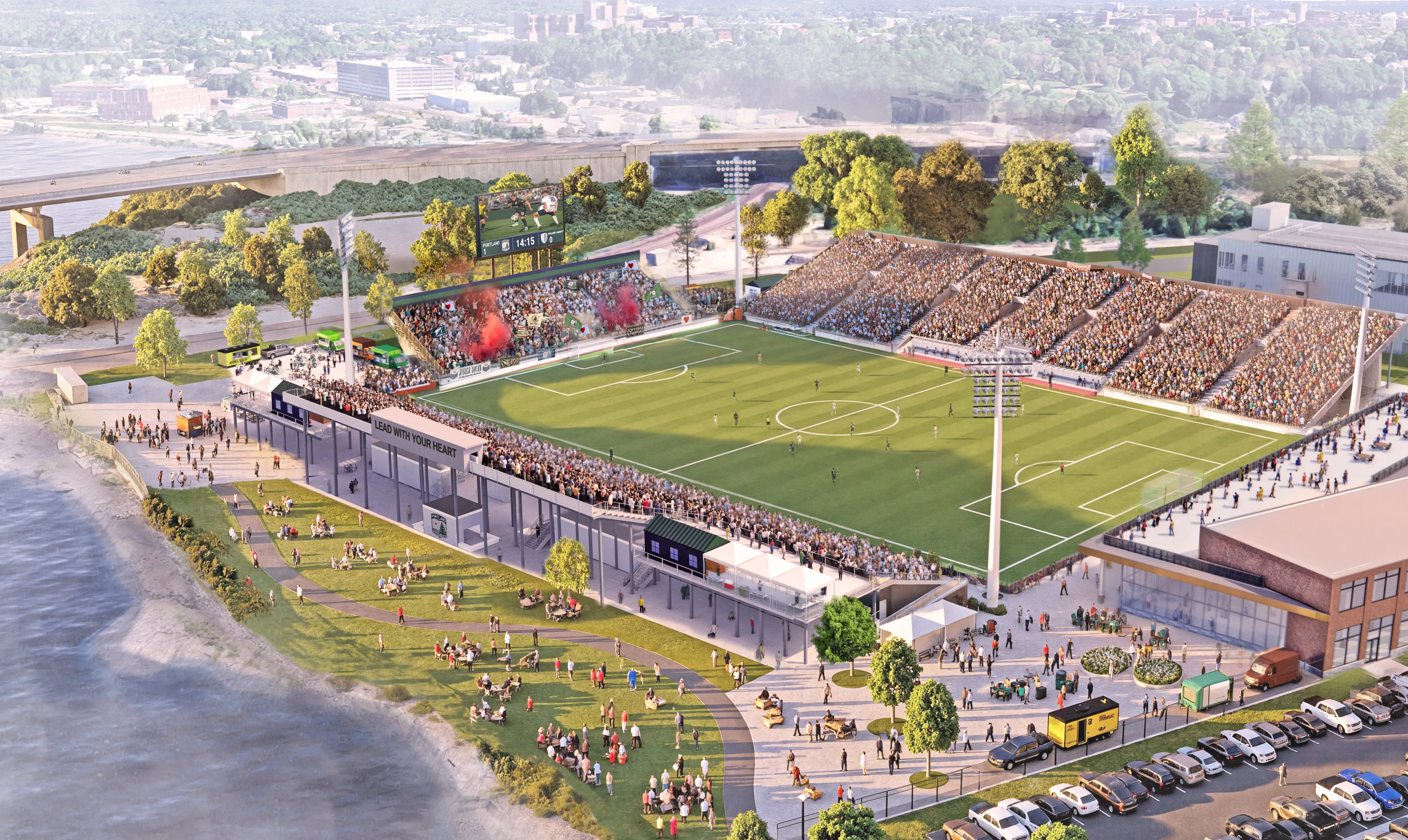
On August 4, Portland Hearts of Pine unveiled plans for a soccer-specific stadium at Cassidy Point, an industrial waterfront site on Portland, Maine's Fore River currently used for coal storage. The club says the project will cost more than $50 million, will be predominantly privately funded, and could open as early as 2029 if construction begins in 2027.
The renderings are striking. The demand case behind them is stronger.
The Demand Story Is Already Proven
Most stadium announcements lead with projections. Hearts of Pine leads with receipts.
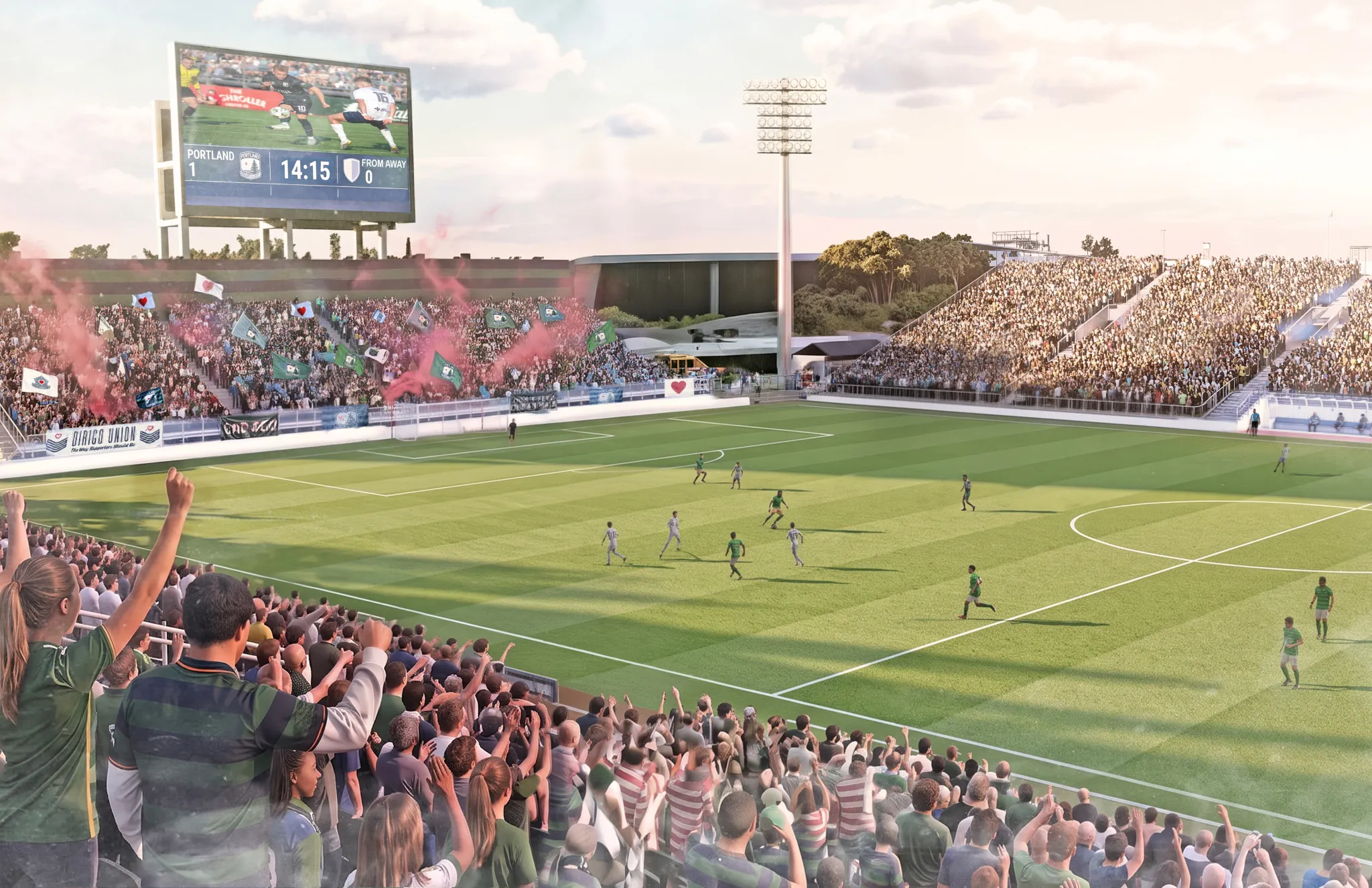
Every home match of the men's team's inaugural 2025 USL League One season sold out. More than 104,000 fans came through Fitzpatrick Stadium across 18 home matches. The season-ticket waitlist now reportedly runs to roughly 8,000 names larger than the venue the club currently plays in, even after approximately $3 million in recent upgrades.
Then came the women's side. When the club opened season-ticket deposits for its USL W League team, set to begin play in May 2027, the initial allotment of 5,000 deposits sold out in under an hour.
That is not a market study. That is a market.
For a club entering only its second season, this is as clean a demand signal as exists anywhere in lower-division American soccer. The 9,000 to 11,000-seat target capacity is not ambition it is roughly the size of the audience the club has already demonstrated it can't currently seat.
The Site: From Coal Pile to Community Anchor
Cassidy Point sits on Portland's working waterfront, where Sprague Energy has long stored coal. The city had already passed an ordinance requiring the permanent removal of the large coal stockpiles, which pushed the site's future into open question. Hearts of Pine has an agreement to acquire the land, though the purchase price has not been disclosed.
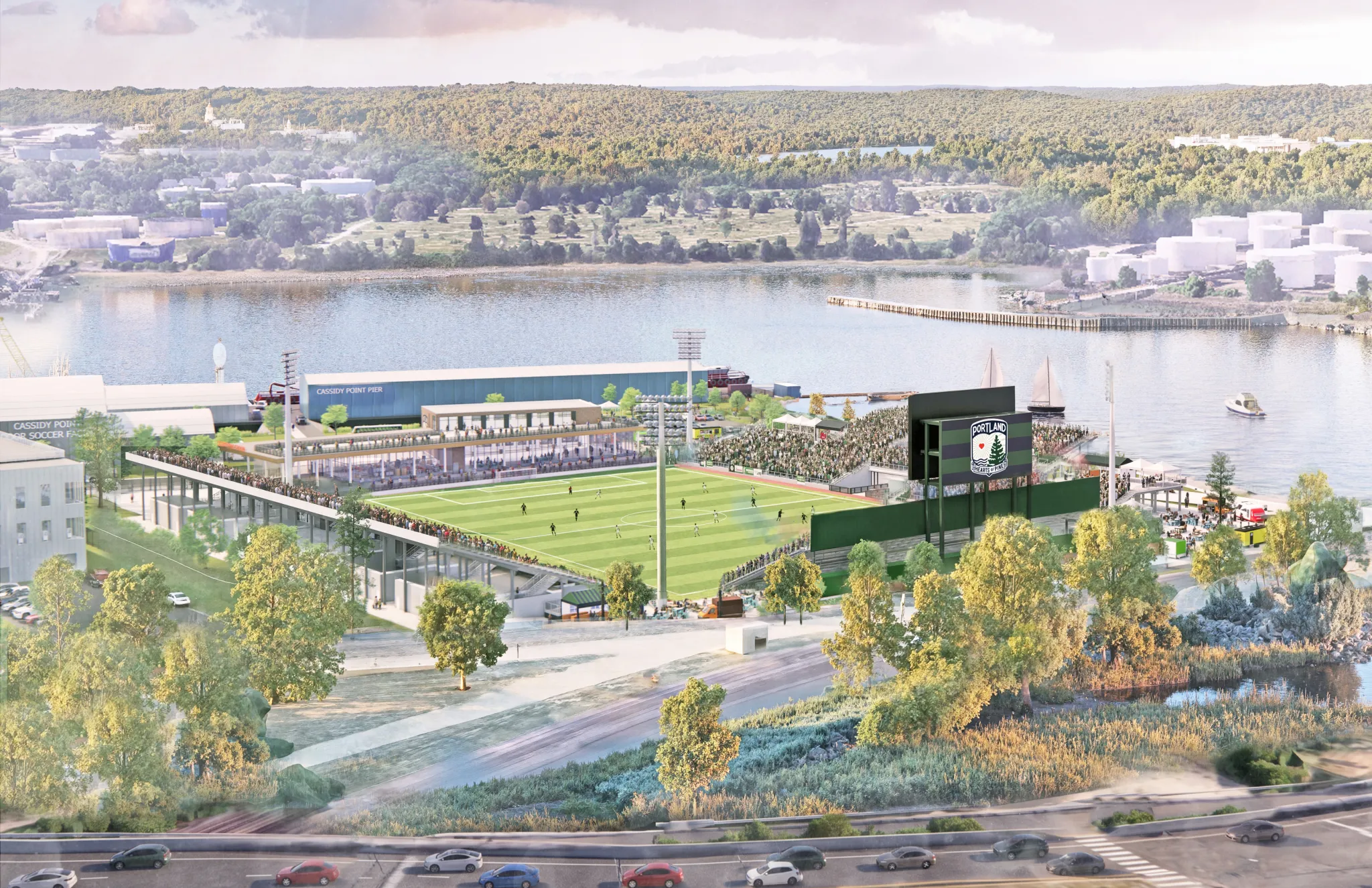
The plan is more than a bowl of seats. It includes a permanent home for both the men's and women's teams, an indoor soccer facility, new public waterfront access and recreational space, and preservation of the site's 600-foot pier for continued marine industrial use.
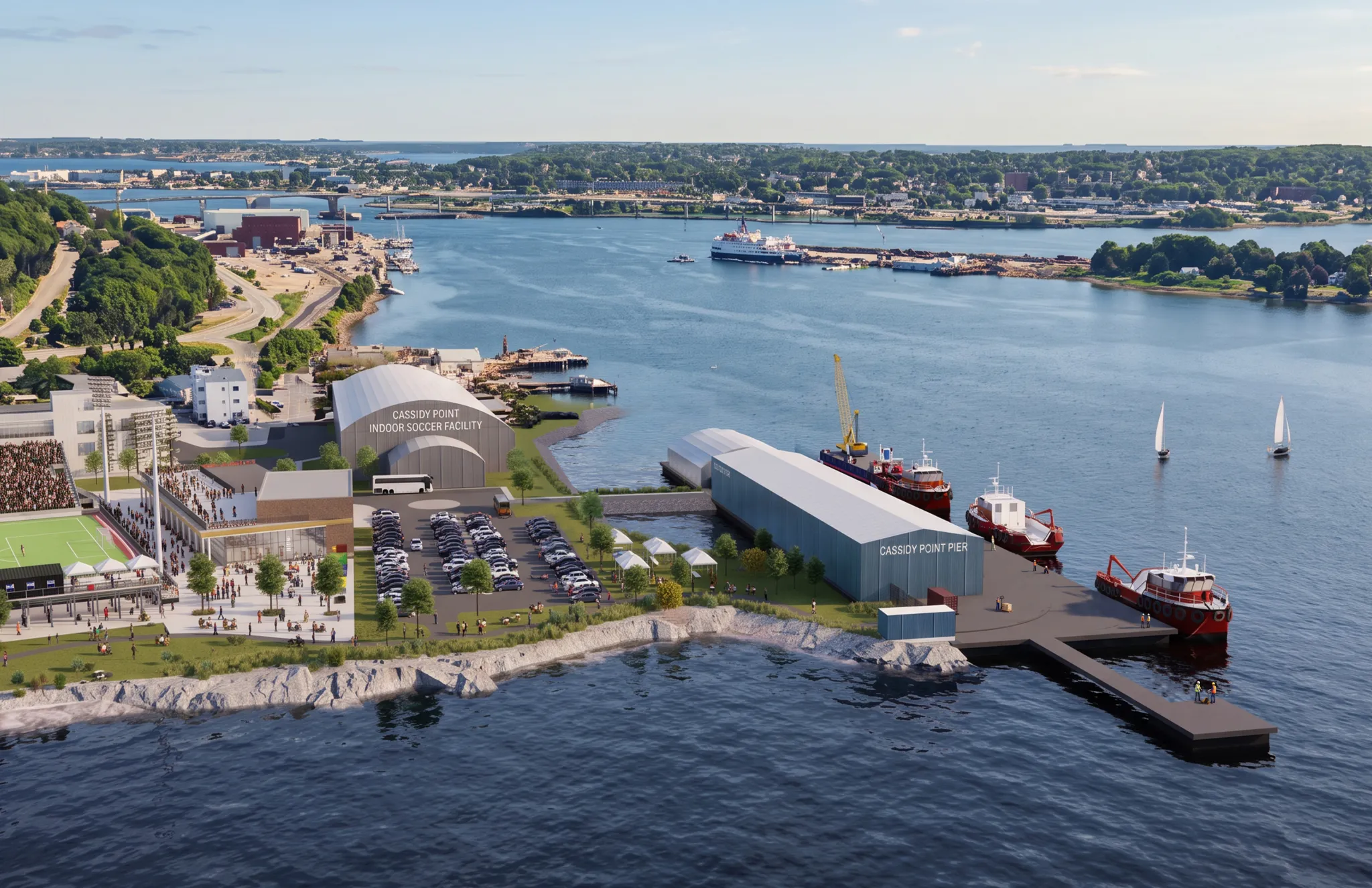
That last detail matters politically. Portland guards its working waterfront fiercely. A plan that converts a coal pile into a stadium while keeping the pier in marine use is designed to read as addition, not displacement.
The Financing Story Is Still Missing
Here is what we know: the project will cost more than $50 million and the club says it will be predominantly privately funded.
Here is what we don't know: the capital stack. The land price. The equity partners. Whether "predominantly" private leaves room for tax increment financing, infrastructure support, or other public tools and if so, how much.
That gap is not a criticism. It is simply the part of the story that hasn't been written yet, and it is the part that will determine whether this project opens in 2029 or joins the long list of announced stadiums that drifted.
The comparables cut both ways. Rhode Island FC's Tidewater Landing showed that a USL waterfront stadium can get built but only through a complex public-private structure that took years of political negotiation and survived multiple near-death moments. A Hearts of Pine stadium at 9,000 to 11,000 seats would be among the largest venues in USL League One, where only four of seventeen current venues seat more than 9,000. Nobody at this level has delivered a project of this scale on predominantly private money without the numbers being stress-tested in public first.
The Map Tells the Strategic Story
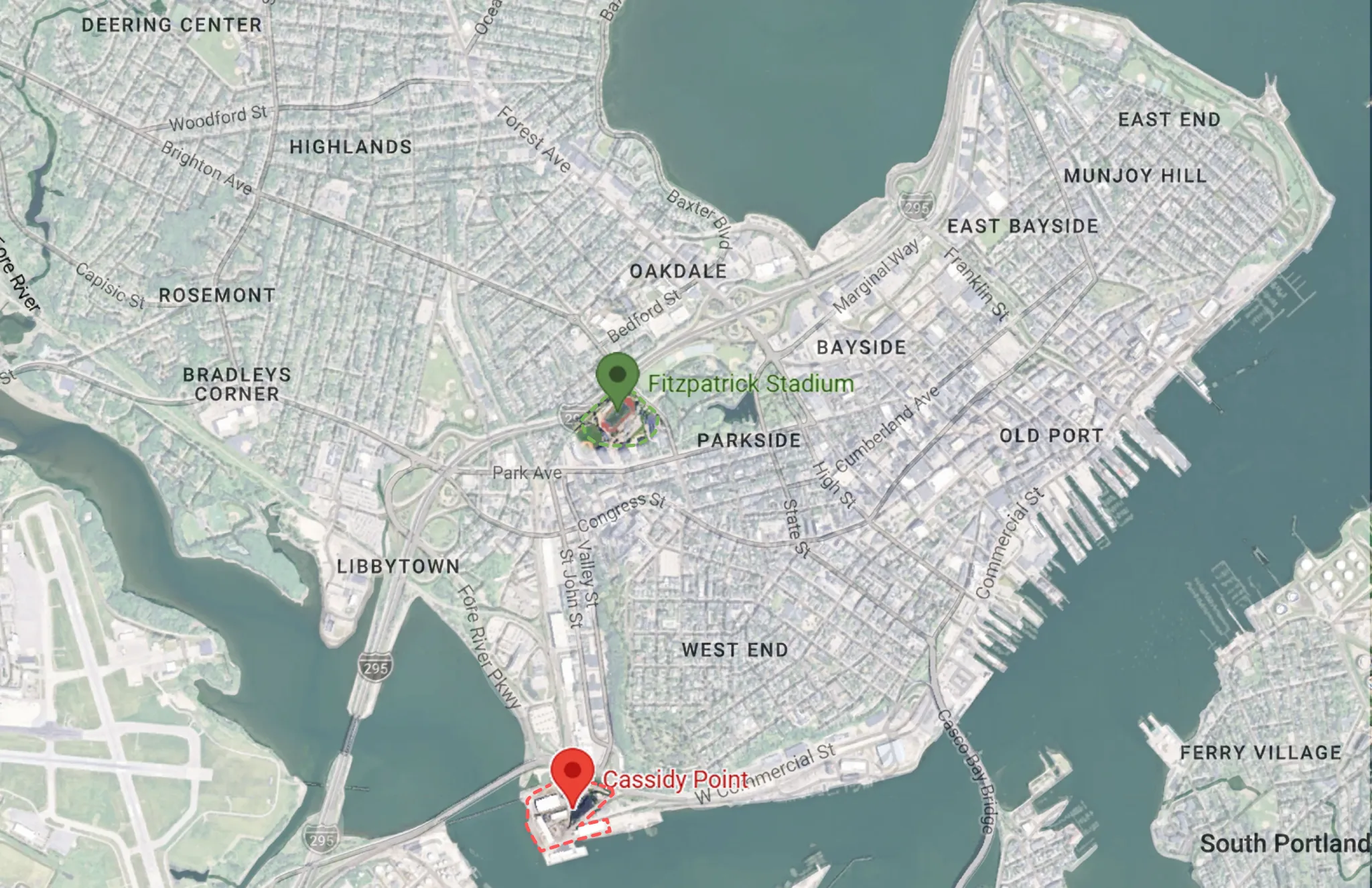
Fitzpatrick Stadium sits inland, near Portland's park district. Cassidy Point sits on the water, at the gateway between I-295 and the peninsula. The move is not just about capacity it is about trading a borrowed municipal field for a controlled, revenue-generating waterfront asset that anchors the club's economics year-round.
That is the modern USL playbook: venue control is the business model, and the club is the anchor tenant of something bigger than 20 match days.
What to Watch Next
The land transaction: the disclosed (or undisclosed) purchase price from Sprague Energy will be the first hard number in the capital stack.
The public-money question: watch whether "predominantly privately funded" hardens into a specific split, and whether Portland is asked for infrastructure, tax tools, or nothing at all.
The permitting clock: environmental review on a former coal-storage waterfront site is not a formality. The 2027 construction start is the most fragile date in the plan.
The women's team launch: May 2027 at Fitzpatrick is the next demand data point. If the W League side replicates the men's sellout streak, the financing conversation gets easier with every match.
Final Thought
Hearts of Pine has done the hard part backwards. Most clubs announce a stadium and hope demand shows up. This club built the demand first sellouts, waitlists, a women's deposit run measured in minutes and is now asking the market to finance what the demand already justifies.
The demand story is complete. The financing story is the sequel. And in stadium development, the sequel is always where the plot gets complicated.
Comments
No comments yet. Be the first to share your thoughts.