Industry Analysis
Columbus Didn't Just Win an NWSL Team. It Set the Public Price of Entry.
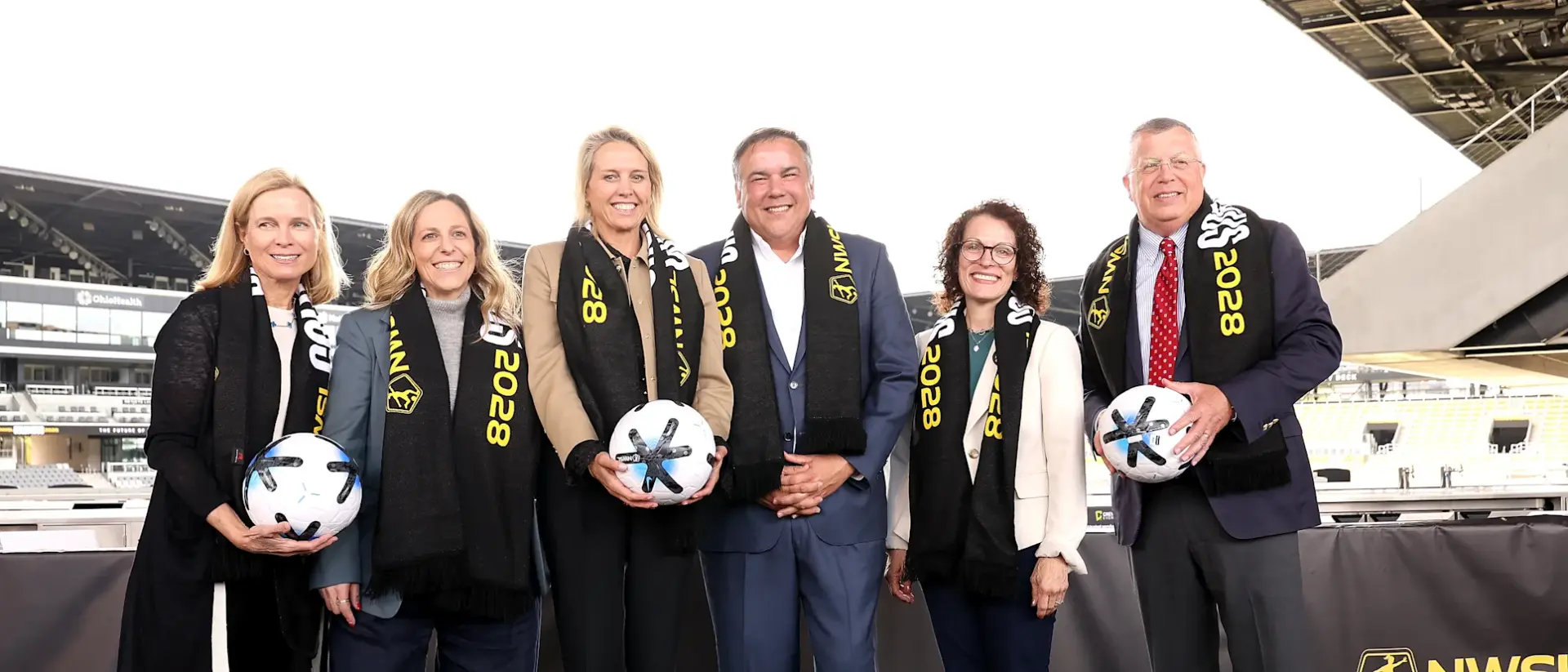
On April 21, the NWSL awarded its 18th franchise to Columbus, Ohio, to a group led by Haslam Sports Group with Nationwide and Drs. Christine and Pete Edwards. The reported expansion fee was $205 million, a league record. The team begins play in 2028.
That fee is the headline. It is not the story.
The story is that before the league said yes, Columbus City Council had to say yes first, by a vote of 5-3 with one abstention, to a public-private deal that commits the city and Franklin County to a combined $50 million. The franchise didn't clear a boardroom. It cleared a council chamber.
The Bigger Picture
For most of its history, the NWSL was a league that took what it could get. Boston's expansion group paid $53 million. Denver's paid $110 million. Columbus paid $205 million, and the ownership group is expected to invest roughly $300 million initially once infrastructure is included.
The league is no longer negotiating from weakness. And when leagues negotiate from strength, the terms they set in one city become the terms they expect in the next.
That is what makes Columbus worth a city official's attention well beyond Ohio.
1. What the Public Is Actually Underwriting
The $50 million in public funding is split evenly: $25 million from the City of Columbus, $25 million from Franklin County. It is directed at the team's training facility and stadium-related work, not the expansion fee itself, which the private group pays.
So the public is not buying a stake in the franchise. It is funding the infrastructure that makes the franchise viable, while the asset itself stays privately held. For a city reader, that distinction is the entire negotiation: the public contribution is concentrated in fixed infrastructure, not equity. The appreciation in franchise value accrues privately. The civic return has to come from use, access, and activity, because it will not come from ownership.
A city putting cash into this kind of deal is buying a tenant and an amenity. It is not buying a share.
2. The Land Cost Nobody Puts in the Press Release
The training facility is slated for McCoy Park, existing public green space. That choice drew local resistance, and the resistance changed the deal.
Council attached a last-minute amendment requiring a plan for a replacement park within 60 days, with a $3 million contribution from the ownership group toward finding a new location. The public cost here was never only the $50 million. It was also converted public land, and the city had to negotiate to get a piece of that back.
This is the part of expansion economics that market-selection coverage routinely misses. The relevant question for a city is not just "how much cash." It is: what public asset is being reallocated, and at what opportunity cost? What is the enforceable timeline on any replacement commitment? Is the community-benefit contribution sized to the asset lost, or sized to end the news cycle?
A replacement-park plan due in 60 days is a real concession. Whether $3 million replaces what McCoy Park was is a question Columbus will be answering for years.
3. The "Litmus Test" Is the Precedent
NWSL Commissioner Jessica Berman described evidence of public support as "a really important litmus test and proxy" in deciding where to expand. Haslam Johnson, who will serve as the team's NWSL governor, said public support "is a key differentiator in being able to win the team."
Read those two statements together. The league treats public co-investment as a screening criterion. The ownership group treats it as competitive advantage. That alignment is not neutral. It tells every city in line behind Columbus that showing up with public money is now part of a credible bid.
This is not a one-city deal. It is an anchor. If the bar holds, the next city does not start the conversation at zero. It starts it at "what will you contribute," because the league has now said, on the record, that the answer matters.
4. The Case That This Is Correction, Not Extraction
The skeptical read has a serious objection to answer, and Berman raised it herself.
Public money has flowed to men's sports facilities for decades. Women's teams, for most of their history, were told to self-finance. Berman's point is that treating public support as a litmus test may simply be the women's game finally getting access to the same municipal tools men's leagues used all along. On that reading, Columbus is not a league extracting from a city. It is a city investing in a women's franchise the way it has long invested in men's ones, and the $50 million is overdue parity rather than a premium.
That argument is real. It is also not a reason for a city to skip the math. Parity in access to public financing does not mean every individual deal is priced correctly. The Columbus structure can be both historically fair and locally expensive. A city official's job is to evaluate the second thing even while acknowledging the first.
What This Signals About the Broader Strategy
The NWSL has moved to a rolling expansion process, accepting groups when the timing is right rather than running fixed bid windows. Combine rolling expansion with a public-support litmus test and you get a league that can keep a steady line of cities competing against each other, each one signaling civic commitment partly in public dollars.
That is a strong position for the league. It is a weaker one for any single city, because the competition is the leverage.
What City and Development Leaders Should Watch
The replacement-park plan in Columbus: the 60-day amendment is the test case for whether community-benefit conditions in these deals are enforceable or decorative.
The next expansion city's public number: if it meets or exceeds $50 million, the litmus test has hardened into a floor.
The split between equity and infrastructure: watch whether any future city negotiates an ownership stake rather than only funding facilities. So far, none has.
Whether "public support" can be demonstrated without public cash: if the league ever awards a team to a city that showed commitment through zoning, land, or operations rather than direct funding, the litmus test is flexible. If not, it is a price.
County-level participation: Franklin County matched the city dollar for dollar. Watch whether multi-jurisdiction funding becomes the expected structure, because it widens the public base being asked to contribute.
Final Thought
Columbus will get a strong franchise, a renovated downtown stadium, and the first professional women's soccer team in Ohio. Those are real civic wins, and the ownership group is serious and well-capitalized.
But the lasting significance of April 21 is not the team. It is that a billionaire-led group paying a record fee still arrived with $50 million in public money attached, and the league said that was exactly right. For the next city in line, that is no longer a Columbus story. It is the opening offer.
Free Industry Report

2026 USL Championship Attendance: Down 7.5%
The USL Championship average fell to 5,148 per match while MLS and USL League One grew. We checked every club figure and found venue control, not market size, predicts crowds.
Read the Report