Stadiums
Detroit City FC Moves Into Its Next Phase: Stadium Redevelopment Begins at AlumniFi Field Site
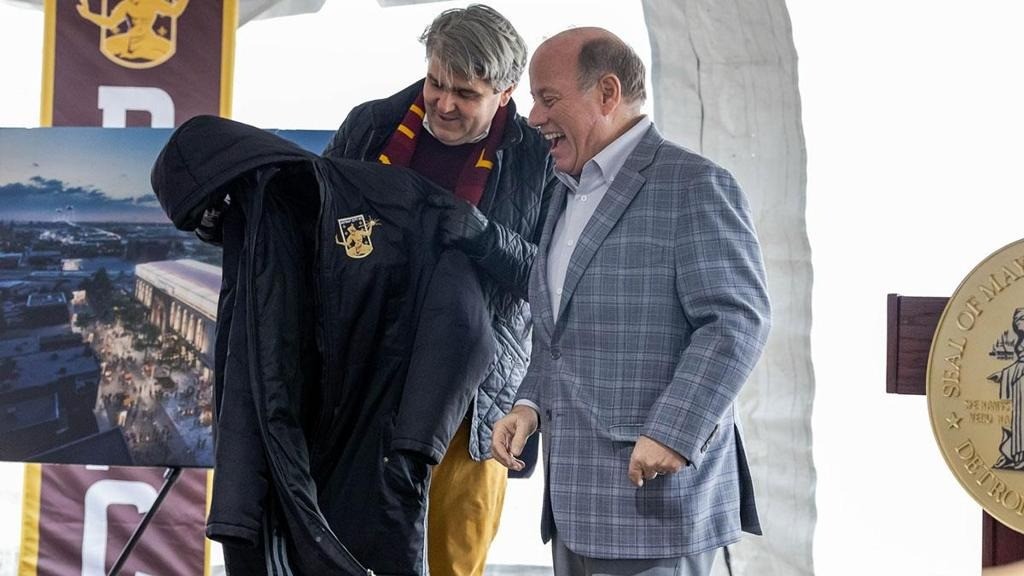
The next chapter in the evolution of Detroit City FC is officially underway.
With demolition now beginning at the AlumniFi Field site, the club is taking a decisive step toward transforming its long-term infrastructure and solidifying its position within the USL Championship ecosystem.
At the center of this milestone is Mike Duggan, whose presence alongside community stakeholders and developers signals something larger than a construction project. This is a coordinated effort between club, city, and capital to reshape a key asset within Detroit's sports and urban landscape.
From Community Club to Infrastructure-Backed Asset
Detroit City FC has long been one of the most culturally rooted clubs in American soccer.
What is now unfolding represents a shift from identity-driven growth to infrastructure-backed scaling.
The redevelopment of the AlumniFi Field site is not just about upgrading a stadium. It reflects a transition toward long-term asset control, increased revenue potential through venue modernization, a stronger foundation for sponsorship and commercial partnerships, and alignment with league-wide expectations around facilities and fan experience.
This is how clubs evolve from passionate local brands into durable sports businesses.
Why This Matters for Investors and Operators
Across the United States, professional soccer is entering a phase where infrastructure is becoming the primary differentiator.
Detroit's project reinforces a broader trend: control of venue equals control of economics.
By advancing redevelopment at AlumniFi Field, Detroit City FC positions itself to capture match day revenue streams more effectively, expand premium seating, hospitality, and sponsorship inventory, increase valuation through fixed-asset ownership, and strengthen leverage in future league and media negotiations.
For investors, this is a familiar playbook seen across successful lower-division and emerging market clubs.
Public-Private Alignment Is the Real Signal
The involvement of city leadership is not incidental.
It highlights a growing pattern across USL markets: municipalities recognizing soccer as a driver of economic development, clubs aligning projects with broader urban planning initiatives, and developers integrating stadiums into mixed-use visions.
Detroit is reinforcing the idea that soccer infrastructure is no longer a standalone project. It is part of a wider development strategy.
The Bigger Picture: USL's Expansion Model in Motion
This development fits directly into the strategic direction of the United Soccer League.
The league's growth is increasingly tied to stadium control and modernization, market-specific ownership groups, community integration, and scalable business models.
Detroit City FC is not just participating in this model. It is becoming a case study.
Final Thought
Demolition marks the end of one phase, but more importantly, it signals the beginning of another.
For Detroit City FC, this is about building more than a stadium. It is about building a long-term platform for growth, revenue, and relevance in an increasingly competitive soccer landscape.
For those tracking how clubs are actually built, financed, and scaled, this is exactly the type of move worth paying attention to.
Comments
No comments yet. Be the first to share your thoughts.