Club Ownership
What Orange County SC Teaches Investors About Building a Modern USL Club
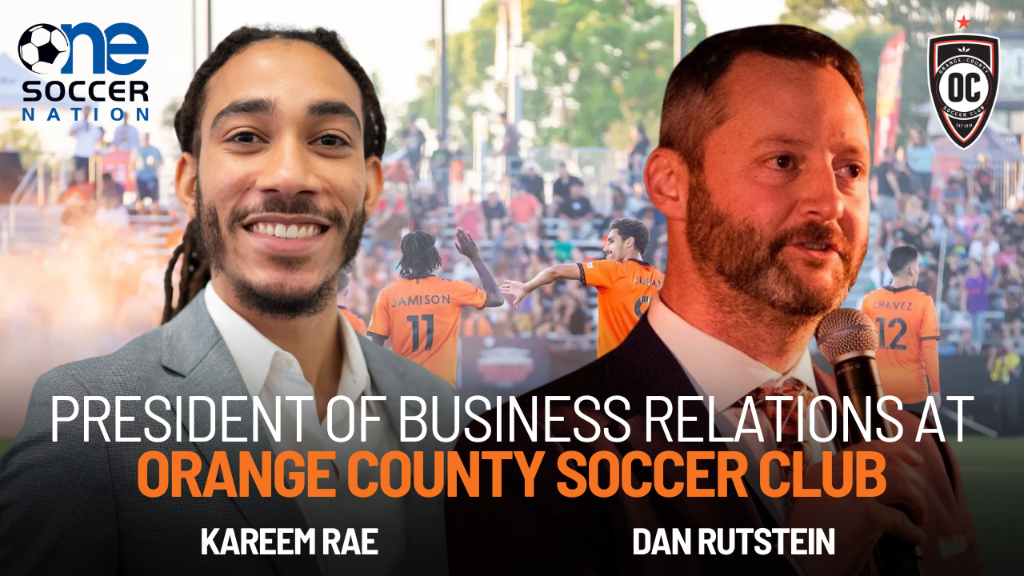
Insights from my conversation with Dan Rutstein, President (Business) at Orange County SC
If you want to understand how professional soccer clubs get built, financed, and scaled in the U.S., don't start with formations.
Start with community, stadiums, league structure, and a business model that survives reality.
On The One Soccer Nation (OSN) Podcast, I sat down with Daniel "Dan" Rutstein, President on the business side of Orange County Soccer Club (USL Championship). Dan's background is uniquely useful for operators: he grew up in England inside true football culture, then spent a decade in the U.S. across government, journalism, and leadership before stepping into the day-to-day of running a club.
1) Promotion & Relegation Isn't a "Fan Debate." It's a Business Model Shift
USL's push toward promotion and relegation is not cosmetic. Dan framed it as a structural change that impacts three layers of a club's operating model.
A) Fan engagement: every match gains meaning
In open systems, the most dramatic games aren't always at the top of the table they're often at the bottom. The survival fight creates weekly urgency.
Operator takeaway: If every game matters, your ticketing, media value, and sponsor attention don't collapse when the team isn't top-4.
B) Commercial upside: "jeopardy" becomes inventory
Dan made a point investors should listen to: relegation battles create sponsorable moments, not just championship runs. "Decision day" style drama becomes broadcast content, brand inventory, and a narrative engine.
Investor takeaway: The league's media product gets stronger when more clubs remain relevant deeper into the season.
C) Player development: pressure environments create export-ready talent
A 19-year-old playing in a relegation scrap experiences real pressure, closer to European football than closed-development environments.
Club-building takeaway: If the U.S. wants to export more players, the ecosystem needs competitive consequences.
2) Why Owners Push Back on Pro/Rel: It's Rational Until the Upside Exists
Dan explained the behind-the-scenes resistance in a way that's refreshingly direct: Many owners come from closed American sports systems and want asset protection. For Championship clubs, pro/rel used to feel like "relegation only" downside without upside. The discussion changes once there is a true top tier to move into (USL's planned D1 structure).
Translation: owners don't fear competition; they fear a structure where they're asked to accept major downside without a credible upside pathway.
3) The Hard Part Isn't the Rules. It's the Infrastructure
Most people argue about how many clubs should go up or down.
Dan's view: the hardest problems are the ones no one wants to wait for stadiums and standards.
He pointed to realities clubs must solve before pro/rel becomes "real": stadium capacity thresholds (and what "D1-ready" truly means), timing and ramp-up periods so clubs aren't promoted into requirements they can't meet, parachute payments and financial shock absorbers, and facility standards, venue control, and matchday experience.
Investor takeaway: The most valuable clubs will be the ones that treat stadium strategy as a core asset because under pro/rel, infrastructure becomes competitive advantage.
4) The "Club World Cup Lesson": Right-Sizing Venues Is the Difference Between Hype and Optics
Dan shared a sharp observation from the recent Club World Cup experience: big matches in big stadiums looked and felt massive, while smaller matches in oversized venues created bad optics low attendance vs. capacity.
Operator takeaway: Event strategy isn't "play bigger." It's "fit the room to the demand." USL stadiums and boutique venues can create sellout atmospheres that outperform larger empty buildings in perceived momentum.
5) "Community First" Isn't Branding. It's the Operating System
When Dan took the job, he asked an executive friend from top English clubs what matters most. The answer: community.
Dan's version of "community" wasn't vague. It looked like theme nights and matchday experiences that make games an event, authentic partnerships beyond "logo placement," and building an identity with local meaning.
He gave examples ranging from cause-led partnerships (safety and awareness) to culture-driven partnerships (food and influencer ecosystems).
Investor takeaway: A club that can build true community demand creates pricing power, sponsor leverage, and long-term resilience even through sporting volatility.
6) Fan Ownership Works, But Only When There's a Real Reason
Orange County's fan ownership didn't happen as a gimmick. It followed a pivotal moment: a serious stadium conflict that triggered a public response from supporters.
Dan described seeing hundreds of fans show up to civic meetings, emotionally invested, organized, vocal. That moment proved something every investor should understand: fans don't "buy in" because you offer shares. Fans buy in because the club already matters.
Operator takeaway: Fan ownership is not the product. It's the multiplier when community attachment already exists.
7) The Player Trading Model: Orange County Built a Pipeline Most Clubs Only Talk About
Orange County has sold multiple players to European clubs, creating a genuine "development-to-export" pipeline. Dan highlighted the logic: MLS is not always the best next step for elite young American players, Europe is the destination for the highest ceiling pathways, and a club that can develop, showcase, and sell becomes a magnet for talent.
What stood out: Orange County doesn't just train players on the pitch. They prepare them for Europe off the pitch too media, professionalism, social presence, locker room navigation.
Investor takeaway: Player trading can become a meaningful revenue stream, especially when paired with sell-on clauses and long-term development credibility.
8) MLS vs USL: Different Incentives, Different Endgames
Dan's framing was clear: MLS is optimized around franchise valuation growth in a closed system, while USL is positioning toward a global football-style structure pro/rel, movement, consequences.
That means "integration" isn't a simple future merger story, because the systems are built on fundamentally different incentives.
Investor takeaway: USL's upside is not "becoming MLS." It's becoming a different product: more open, more narrative-driven, more globally familiar and potentially more exportable.
The Soccer Insider Bottom Line
This conversation reinforced a reality most new ownership groups underestimate: soccer clubs aren't built by hype. They're built by systems.
The clubs that win on and off the field will be the ones that can align stadium control plus infrastructure readiness, community attachment plus sponsorship leverage, competitive structure plus meaningful matches, and player development plus transfer economics.
Orange County is a case study in how those pieces come together.
If USL executes pro/rel the right way, the clubs best positioned won't just be the biggest markets they'll be the best operators.
Listen to the full episode
Comments
No comments yet. Be the first to share your thoughts.