Club Ownership
From Fighter to Fund Manager: How Nicholas Edwards Wants to Put Fans and Athletes in the Owner's Box
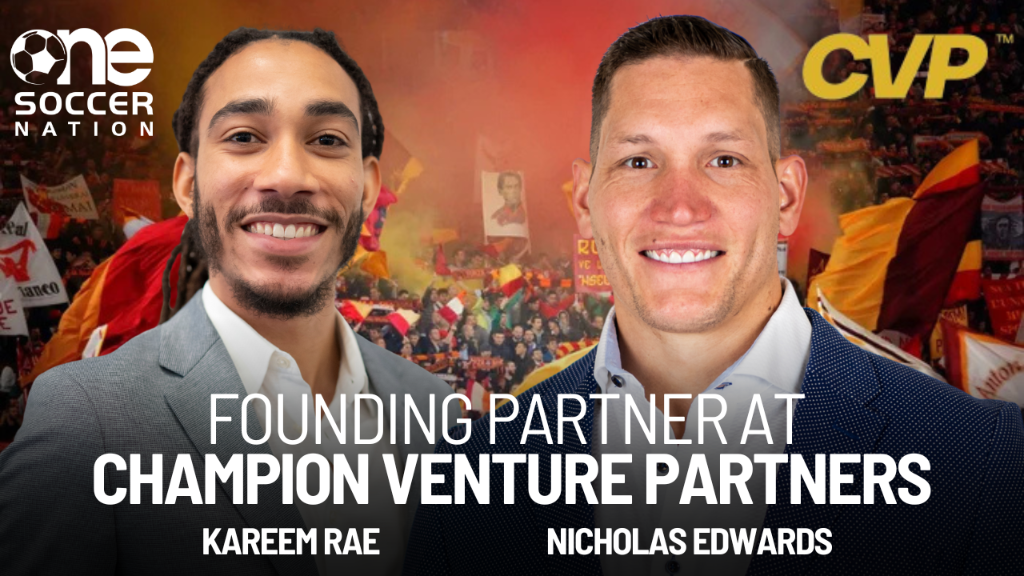
Former MMA athlete turned sports investor Nick Edwards is reshaping how capital flows into the sports ecosystem. As co-founder of Champion Venture Partners (CVP) and Champion Fund, he's building a model that opens sports ownership to athletes and everyday fans something traditionally reserved for billionaires and institutions.
In our conversation on The One Soccer Nation (OSN) Podcast, Nicholas shared a playbook for where the global sports investment landscape is heading. Below are the most impactful insights for leaders building and financing professional soccer clubs today.
From Athlete to Investor: A Nonlinear Path With a Clear Vision
Nicholas transitioned from college football to MMA, then into physiology and entrepreneurship before entering sports investing. The common thread: a firsthand understanding of the athlete journey and the business forces surrounding it.
Key takeaways:
The next generation of athlete-investors is more sophisticated and business-minded than ever. Early career planning is becoming the norm, not the exception. Athletes who understand tech, performance, and content have unique leverage in the investment seat.
For club operators, this signals a growing opportunity: athletes as strategic partners, not just endorsers.
What Champion Venture Partners Actually Solves
CVP's core belief is that sports should function as a true alternative investment class and not just isolated team assets.
Their model gives both accredited and non-accredited investors access to ownership stakes in teams and leagues, stadium and mixed-use real estate, tech and media infrastructure, fan-experience verticals, and sports-adjacent companies.
Most importantly, CVP is one of the only platforms where athletes, institutions, and everyday fans invest together. This matters because the future of sports investment is wide participation, not closed-door syndicates.
Athletes in the Driver's Seat: More Than a Talking Point
Nicholas built the fund with athletes top-of-mind.
How it works: Athletes invest into the portfolio. CVP uses their insights to source deals especially in performance, fan engagement, and media. If a portfolio company aligns with an athlete's strengths, CVP may place them as a fractional exec, advisor, or brand lead.
This creates a flywheel where Experience leads to Ownership, which leads to Influence, which leads to Economic Upside.
Few firms operationalize athlete involvement this way, and it positions CVP differently in the market.
The Rise of Fan Ownership and Why It's Accelerating
Crowdfunding in sports is no longer a novelty. USL clubs, MLS NEXT Pro projects, and European teams are increasingly bringing fans into the cap table.
Nicholas explained why: Clubs need 365-day revenue, not just match day spikes. Digital behavior is shifting influence toward the consumer. Fan equity creates stronger loyalty and recurring engagement. Modern legislation finally allows compliant investment at scale.
The biggest bottleneck? Ownership turnover. For fans to participate, current owners must be willing to sell or restructure. That change is coming, but it will be gradual.
US vs. Europe: Where Investors Should Look Today
Nicholas sees two major opportunity zones:
United States: Higher valuations driven by media rights and land values. Massive greenfield opportunities to build clubs and mixed-use districts. Ideal for investors who want to create value, not just buy into it.
Europe & Latin America: Many assets are undervalued relative to potential. Stadium and media modernization is still early. Upside resembles MLS from 2012-2016.
In short: The US is the best market to build from scratch. Europe may offer the best arbitrage.
Why Mixed-Use Sports Districts Are the Billion-Dollar Model
Nicholas believes the future of soccer is tied to sports-anchored real estate ecosystems, not standalone stadiums. Think residential, entertainment, F&B, co-working, youth tournaments, short-term rentals, hospitality, training facilities, and content studios all in one footprint.
He points to The Battery in Atlanta as the blueprint: a high-yield entertainment district wrapped around a team.
USL and MLS groups are already following this model especially in markets building 10-15K seat stadiums with 50-100+ acre development plans.
For club ownership groups, the message is clear: Your club is not just a team. It's the anchor of a real estate and media ecosystem.
Why Institutions Are Flooding Into Sports
Private equity is now everywhere in sports because returns have outperformed public markets for decades, media rights are escalating, brands are becoming more global, real estate underpins long-term value, and demand is sticky and recession-resilient.
But there's also a structural shift: legacy owners want liquidity, leagues have relaxed ownership rules, and platforms like CVP now create vehicles for blended investor bases. This is opening the door for new models of capital formation where retail, athlete, and institutional investors coexist.
Performance Data Will Become a Fan Product
Nicholas predicts the next major wave will be the fusion of athlete performance, real-time data, and fan engagement.
Just as Amazon introduced Next Gen Stats in the NFL broadcast, soccer viewers will increasingly see sprint speed overlays, passing probabilities, and biometric-informed insights within privacy bounds.
This isn't about analytics it's about storytelling. Fans want deeper connection. Performance data will become entertainment.
Where CVP Wants to Be in 5 Years
Nicholas sees Champion Venture Partners becoming the leading access point for retail investment into sports, the first true sports private market index, a platform that normalizes athlete and fan ownership, and a catalyst for emerging soccer investments globally.
In an industry that has historically been closed-off, CVP aims to build the infrastructure for open participation.
Final Thought
Nicholas captured it best: "People have been left out of the room for far too long. Sports should belong to the fans and athletes who drive it."
For investors, club operators, and city partners, that message is more than philosophy it's a preview of where the industry is heading.
Listen to the full episode
Comments
No comments yet. Be the first to share your thoughts.