Club Ownership
How Community Capital, Stadium-First Thinking, and USL Pro/Rel Are Reshaping Lower-Division Soccer
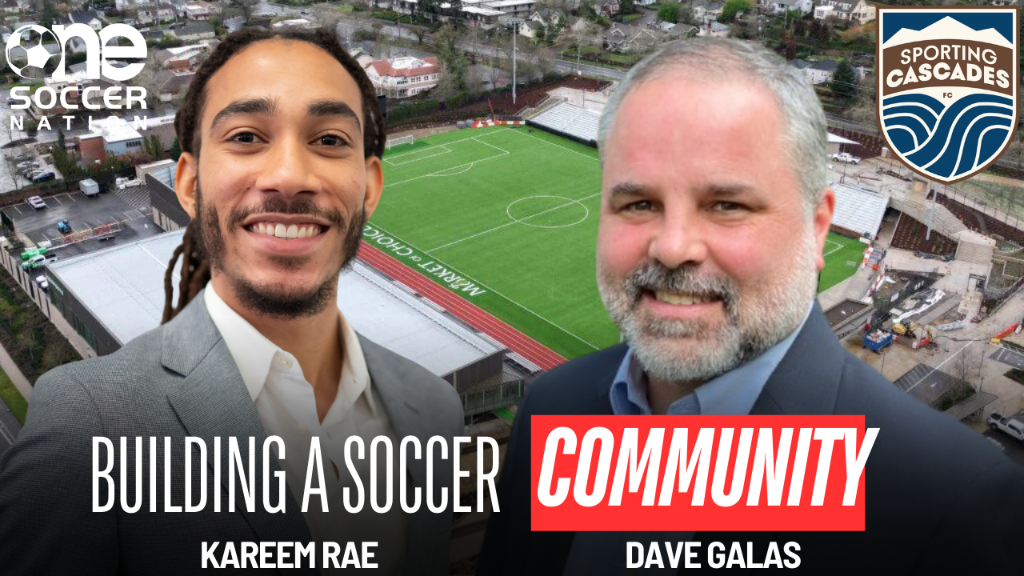
Featuring Dave Galas, President & Co-Founder of Sporting Cascades FC
Professional soccer in the United States is often framed around expansion fees, mixed-use real estate, and institutional capital. But every so often, a club emerges that reminds us of a different and equally powerful model.
This edition of Soccer Insider dives into one of the most compelling ownership and stadium stories in the USL ecosystem: Sporting Cascades FC in Eugene.
After sitting down with Dave Galas on The One Soccer Nation Podcast, one theme stood above all others: soccer works best when it is built as a community asset first, and a business second.
A Stadium Saved by the Community
Sporting Cascades FC exists because an entire city decided its historic stadium was worth saving.
Originally built in 1938, Eugene's Civic Stadium was an all-wood, community-donated facility that once housed professional baseball. When the baseball club departed, the stadium was deemed surplus. A big-box retailer planned to tear it down.
Instead, the community stepped in.
- Over USD $4 million raised in six months
- Entirely private donations, ranging from USD $5 to six-figure checks
- Hundreds of residents involved, including children fundraising for the cause
The stadium was purchased, saved, and then three weeks later tragically burned down in an accidental fire.
Most projects would have ended there.
This one pivoted.
Phase One: Youth Sports Before Pro Soccer
Rather than rushing back to professional soccer, the group rebuilt with intention.
Phase One was not the stadium, it was a multi-use indoor field house operated by Kids Sports, a local organization serving roughly 15,000 children per year across multiple sports.
- Indoor, multi-court facility
- Used by schools during the day
- Open to the broader community after hours
Only after the youth facility was complete did the project return to Phase Two: the stadium itself.
The full campus stadium plus field house represents roughly USD $50 million in total investment, assembled over time, not through speculative development, but through local trust and long-term patience.
A Different Ownership Path in USL
Sporting Cascades FC challenges several common assumptions in U.S. soccer:
1. You don't need a mixed-use district to launch sustainably
This project has no hotels, restaurants, or retail wrapped around it. Its value is social, cultural, and long-term.
2. You don't need heavy public subsidies to win civic support
The city acted as a facilitator, not a financier because the community led the effort.
3. USL League One can be economically viable and respected
Dave highlighted a growing recognition among owners that USL League One is no longer a "step down," but a sustainable professional tier with real upside.
Promotion & Relegation: The Fans Are Ready
One of the most revealing insights from the conversation came from local fan surveys.
Among respondents:
- Overwhelming support for promotion and relegation
- Near-universal understanding of the concept
- Very little education required
The takeaway was clear: The hardest part, fan education has already been done, largely through global media, European football access, and pop culture.
For club operators, this matters.
It means future competition structures will be judged less on theory and more on execution, fairness, and financial guardrails.
Lessons for Investors and Operators
From an investor and operator standpoint, Sporting Cascades FC offers several durable lessons:
Stadium-first still matters, but ownership models can vary dramatically Community capital is real capital when trust exists Youth infrastructure creates political and cultural insulation Lower-division clubs can be sustainable without chasing top-tier spend USL's long-term value may be unlocked through competitive movement, not just expansion
This is not a replicable blueprint, but it is a powerful reference case.
Why This Matters Now
With the 2026 World Cup approaching, the 2028 Olympics in Los Angeles, and a potential 2031 Women's World Cup, the next decade will reward clubs that are embedded locally, not just financed aggressively.
Sporting Cascades FC is betting that authenticity, patience, and community alignment will outperform speculation.
History suggests they may be right.
Comments
No comments yet. Be the first to share your thoughts.