Club Ownership
How Riverside Is Building Its First Professional Soccer Club And Stadium District
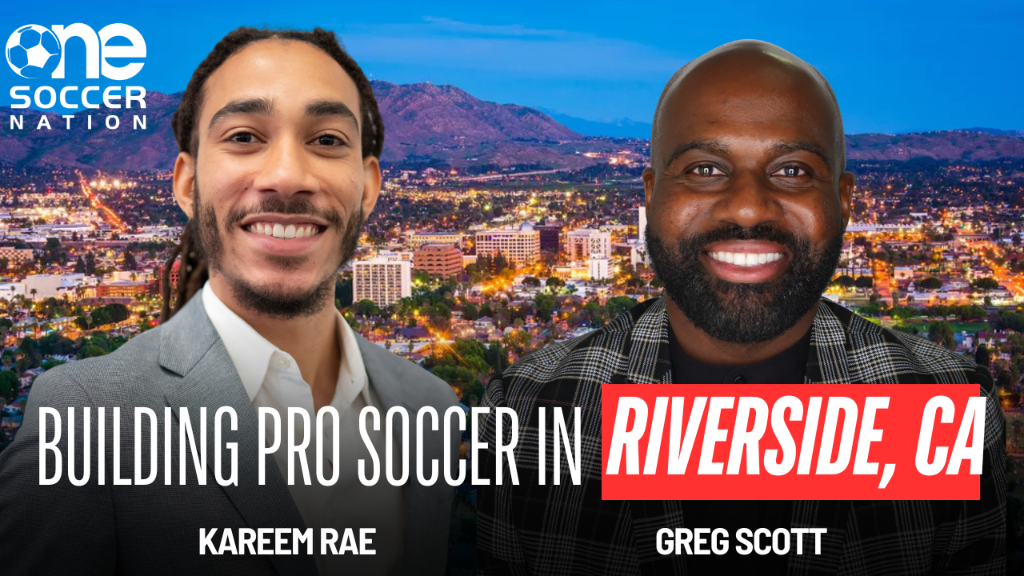
When most people think about Southern California sports, they picture downtown arenas and coastal super clubs. Very few think about Riverside.
Gregory Scott Jr. does.
An entrepreneur, developer, and long-time Riverside resident, Scott is leading an ambitious effort to bring a professional soccer club and a modern sports and entertainment district to a city that currently has zero professional teams despite being one of the largest cities in the region.
From Framing His First Dollar To Framing A City-Defining Project
Greg's story starts long before site plans and feasibility studies. At 12 years old, sweeping hair in a barber shop, he framed his first real dollar and wrote "$1,000,000" around it, labeling it his "first dollar of a million." That early mindset still drives how he approaches opportunity today.
Instead of chasing every deal, he focuses on three filters: can he set a compelling vision that others want to follow, can he align the right partners and team around that vision, and does the opportunity fit the lifestyle and long-term outcomes he wants to build. For investors and operators, the takeaway is simple: capacity and clarity at the ownership level are foundational. Projects of this scale only move when someone at the center is both obsessed with the vision and disciplined about the people they bring into it.
Falling In Love With The Game At The Right Time
Greg did not grow up as a soccer lifer. He was a basketball guy. His wife was the footballer she played at Concordia University and kept nudging him toward the game. The real turning point came during the World Cup final between France and Argentina. Watching Messi and Mbappé trade blows in one of the most dramatic matches in modern history, he felt something that every stadium investor eventually has to understand: how rare and difficult it is to score a goal, how a nil-nil match can still be beautiful, and how a 90-minute match becomes a roller coaster of tension with outsized emotional payoff.
The Second Renaissance Of American Soccer
The 1994 World Cup helped catalyze the launch of Major League Soccer and the first modern wave of stadium projects in the United States. Greg sees 2026 as the second renaissance. MLS is roughly 30 years old. European leagues like the Premier League have existed for more than a century. The United States is still a top-ten league ecosystem at best when compared globally. That gap is not a weakness it is runway.
For Riverside and markets like it, the 2026 World Cup is not just a tournament. It is a once-in-a-generation demand shock that will push more kids into the sport, push more municipalities to consider soccer assets as civic infrastructure, and push more investors to treat soccer as a serious long-term allocation.
Why Riverside And Why Now
When Greg first invested in professional soccer, it was as a minority investor in Orange County SC. That experience gave him a front-row seat to how a club can unite a community and drive economic activity beyond match day. The Riverside opportunity came together almost accidentally during a leadership cohort, an assistant city manager presented a slide mentioning an interest in professional sports. Greg approached city staff and was told: "We are interested. Go do your due diligence and bring us something back."
From an investor lens, Riverside checks several structural boxes: one of the largest cities in the region without a professional team, a county two to three times larger than peer markets that already support multiple professional teams, a heavily Hispanic population where soccer is already part of the culture, and residents currently exporting their entertainment dollars to Los Angeles and Orange County.
This is the classic leakage problem that stadium districts can solve when executed correctly: build the right anchor locally so money, pride, and identity stop flowing out of the market.
The Power Of Being A Local Owner
Greg has lived in Riverside for more than 11 years. He has started businesses in the city, hired local employees, served on the Chamber of Commerce since 2019, sat on business councils and the executive committee for the greater board, and volunteered with nonprofits while building relationships with city council, police, fire, and other key stakeholders. When the city evaluated who should lead a project of this magnitude, that track record mattered.
A local lead is not just a nice-to-have. It changes the accountability he still shops at local grocery stores, his kids go to local schools, and his name is attached to the outcome. For investors, this is a governance and risk point. Projects led by people embedded in the community tend to navigate politics, entitlement, and community engagement more effectively than those driven purely by outside capital.
Riverside's Identity And The DNA Of The Club
Riverside is not a transient city. It is a place of legacy families and long-standing roots residents casually mention that their families have been there for 50, 60, even 70 years. One of the most important stories tied to this project is the Ab Brown Sports Complex: over 20 soccer fields, built with private funds led by a former mayor who rallied his friends to put in irrigation and create a home for youth soccer. A generation of players grew up on those fields.
That site is now a key part of the vision for the new sports and entertainment district. The nostalgia and emotional attachment to that land become part of the club's DNA. This is a critical lesson for operators: you do not impose a brand on a city. You draw the brand out of the city's own stories, language, and landmarks.
Inside The Stadium District Vision
Greg's development company, GCS Development, is working with a 56-acre city-owned site. The goal is not to drop a single-use stadium into a parking lot it is to build a multi-purpose district that functions as an economic engine on game days and non-game days alike, with a soccer-specific stadium, mixed-use development including residential, retail, commercial, and hospitality, and community fields integrated into the site.
The strategic intent is to create a city anchor, not a standalone venue. You come for the game, but you also stay for the district and return even when no match is scheduled.
A Dual Pathway To Pro: On And Off The Pitch
One of the most interesting concepts Greg articulated is a dual pathway to pro. On the field, players move from youth to professional environments and the club becomes a visible local pathway that young talent can realistically aspire to. Off the field, the project creates jobs across operations, marketing, events, and facility management. For investors, this dual pathway is not just a community story it is workforce development and recurring job creation.
Technology, Media, And The Next-Generation Fan Experience
Greg is clear about a key cultural difference: in Paris at a Champions League match, nobody left their seat. In the United States, we are not quite there yet. To bridge that gap, the Riverside project is leaning into technology and experience design AR-based soccer experiences, lighting and in-seat effects, and immersive entry and exit experiences. The game remains the core product, but in a market still learning what it means to be a football culture, the experience around the match can accelerate adoption.
The Reality Of Building Big: Puzzles, Unknowns, And Iteration
From the outside, a stadium project can look inevitable. Inside, it feels like assembling a 10,000-piece puzzle. Greg highlighted several operational truths: there are multiple stakeholders with different risk profiles, site plans evolve as scope is refined, and project cost numbers change throughout the process. The Riverside team had an initial project cost range but pulled back from publishing a firm figure while they refine the site plan and scope with the city and consultants. That is not a red flag it is a reminder that serious projects are iterative.
Why Riverside Matters For The Future Of Soccer Investment
Riverside is not a one-off story. It is a template for the type of markets that will define the next chapter of American soccer: large, growing cities without existing professional sports; regions where residents export entertainment dollars to nearby metros; communities with deep roots, strong youth participation, and underutilized land that once hosted local sports.
If executed well, Riverside can become a proof of concept for how stadium-anchored districts can recapture economic leakage, how local leadership and civic alignment de-risk complex deals, and how mixed-use multi-purpose sites outperform isolated venues over time. For investors and operators looking beyond the usual big-market headlines, projects like this are where the real strategic upside lives.
Listen to the full episode
Comments
No comments yet. Be the first to share your thoughts.