Industry Analysis
Brownsville, SpaceX, and the USL: Building Soccer's Next Cross-Border Club Market
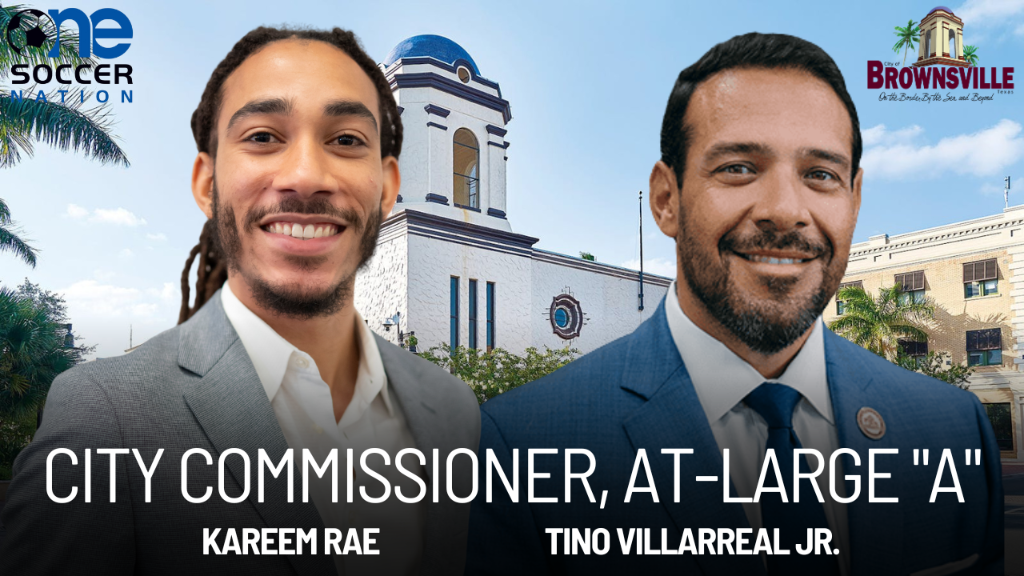
When you think about the next great American soccer market, you might not immediately picture City of Brownsville, Texas. You should.
Brownsville is a 200,000-person border city sitting at the intersection of three powerful forces: transformational industrial growth, a deeply embedded soccer culture, and a civic leadership group that is aligned, business-minded, and openly pro-soccer.
In a recent conversation, Brownsville City Commissioner At-Large "A" Tino Villarreal, Jr. laid out why the city has signed a Letter of Intent (LOI) with the United Soccer League (USL) to explore bringing a professional club and stadium-anchored district to Brownsville and what that means for investors, operators, and potential ownership groups.
This is not just another expansion headline. It is a case study in how city leadership, public-private financing tools, and cross-border demographics can converge to create a high-upside soccer project.
A City Entering Its Fastest Growth Era
Villarreal describes Brownsville as being in its fastest growth era. The numbers behind that statement are significant: a population of about 200,000 with the city footprint roughly the size of Cleveland; 1,200 new families recently moved to the area with an average household income around $250,000, in a city where the current household average sits near $50,000; and massive industrial projects underway including SpaceX rocket launches, a multibillion-dollar LNG facility, two private industrial parks, a new industrial tech district, and a growing deep-water port.
Every major U.S. growth story has had a moment where the fundamentals and timing aligned. Villarreal believes Brownsville is in that moment now. For an investor or operator, this is exactly the kind of macro context you want around a new stadium and club: rising incomes, new employers, inbound talent, and a strong pipeline of long-term economic activity.
Leadership That Started With Trash Bins, Not Titles
One of the most telling parts of Villarreal's story is how he measures fulfillment in public office. It is not in ribbon cuttings it is in solving basic problems for residents who do not know where to go. Helping someone get a new trash bin, fixing a streetlight, responding to emails from people who feel unheard.
That might sound small, but it is the foundation of political capital. When a commissioner and his colleagues build trust at a household level, it becomes much easier to carry large-scale projects like a stadium-anchored district through a public process.
Brownsville's commission is also unusually entrepreneurial: the mayor is a Notre Dame-educated finance professional and company owner, other commissioners are restaurateurs, developers, and property owners, and Villarreal himself has an entrepreneurial background and now works in education. For club investors, that blend of business experience and civic responsibility is critical.
The One City Mindset
Brownsville has adopted a simple mantra: One City. Coined and championed by City Manager Helen Ramirez, One City is a cultural operating system inside city hall. It rejects the classic municipal mentality of "that is not my department" and replaces it with an all-hands, shared-responsibility mindset.
Villarreal compares it to a great restaurant in a great restaurant, any server will refill your water or grab what you need. They do not say, "That is not my table." Applied to a stadium and club project, One City means fewer internal blockers and silos, faster coordination between departments from utilities to planning to economic development, and a unified front when working with outside investors and the league.
Why Brownsville Is a Soccer Market, Not Just a City With Soccer Fans
Brownsville does not need to be convinced to like soccer. The culture is already there. Five of the city's seven high schools have won state soccer titles in Texas. The annual Brownsville soccer tournament brings more than 60 teams from across Texas and neighbouring states. The city is also 96% Hispanic, with a strong Mexican influence previous owners in other Texas markets consistently report that the majority of their fan base is Hispanic. In Brownsville, that profile is amplified.
Kids grow up with the game. The sport is embedded in family life and community identity. When you layer a professional club structure on top of that with an academy pathway and clear identity you are not trying to manufacture demand. You are formalizing it.
The Stadium-Anchored District: 118 Acres, 32 Ready to Transform
The LOI between Brownsville and the USL focuses on the Brownsville Sports Park, which already includes an existing stadium, ten auxiliary soccer fields, four baseball fields, and 118 developed acres overall. The real unlock sits in the 32 undeveloped acres attached to the site.
The city and USL are exploring a project with a minimum 5,000 to 10,000-seat soccer-specific stadium, mixed-use development that can include residential, retail, commercial, and hospitality, and a sports and entertainment district model that drives activity on non-match days. Villarreal is clear: a USL club will only use the stadium about 40 days a year. The other 320 days must be filled with concerts, community events, and other sports to justify the investment.
How Brownsville Is Thinking About Financing: Public-Private by Design
Texas is structurally oriented toward public-private partnerships. Bond capacity is limited and there is strong political pressure to keep property taxes low. Brownsville is approaching the stadium and district through that lens, exploring hotel occupancy tax (HOT tax) allocations, sales tax generated through economic development entities, and economic development funds deployed via Brownsville's incentive corporations.
The goal is clear: do not raise property taxes on residents, use tools designed for tourism and economic development, and attract private capital to the table as a true partner. For investors and operators, this is exactly the environment you want: a city that is willing to co-invest with non-property-tax tools and is actively seeking private partners.
A True Cross-Border Catchment: A Three-Million-Person Soccer Basin
Most club market analyses stop at the metropolitan statistical area line. Brownsville's opportunity crosses a national border. Villarreal frames the catchment as: Brownsville at about 200,000 residents, the larger Rio Grande Valley region on the U.S. side at roughly 1 million residents, Matamoros at about 700,000 residents, and Reynosa at about 1.2 million residents. Viewed as a functional cross-border region, the potential fan base is close to 3 million people.
The relationship between Brownsville and its sister cities in Mexico is not theoretical it is daily life. People live on one side of the border and work, shop, and dine on the other. Families own homes in both countries. Thousands of trucks and cars cross multiple bridges every day. For a USL club, that means something unique: the realistic ability to be one of the league's first genuinely cross-border clubs with regular international attendance.
Storytelling As Infrastructure: Why a Docuseries Matters
One Soccer Nation's proposal includes a docuseries concept designed to put Brownsville on the global stage using a model similar in impact to what Welcome to Wrexham did for its town. For Villarreal, that kind of storytelling is more than marketing. It is a way to showcase Brownsville's transformation from a historically overlooked border city to a hub of space, energy, and innovation.
Brownsville is already living a science-fiction-sounding future: regular rocket launches, real conversations about rocket travel that could take you from Brownsville to Paris in under an hour, and the prospect of humans reaching Mars being advanced literally in its backyard. Combining that narrative with a professional soccer project creates a rare storytelling asset that can drive tourism, investor interest, and long-term brand value for the club.
Key Takeaways For Investors And Operators
Brownsville is not a typical expansion story. It is a live case of how a border city in the middle of a generational economic shift can use a USL club and a stadium-anchored district as both a symbol and a driver of what comes next. The city offers macroeconomic upside, deep authentic soccer culture, stadium-anchored district potential, public-private partnership readiness, cross-border scale, aligned civic leadership, and significant media leverage.
For serious investors and operators, it is a market worth watching very closely and, for some, a market worth entering.
Listen to the full episode
Comments
No comments yet. Be the first to share your thoughts.