Club Ownership
Inside Jacksonville's $1B+ USL Vision: Why Stadium Control, Real Estate, and Community Buy-In Decide Long-Term Success
If you want to understand how professional soccer clubs are actually built and sustained in the U.S., you don't start with formations or transfer strategy.
You start with market rights, stadium control, capital structure, and community alignment.
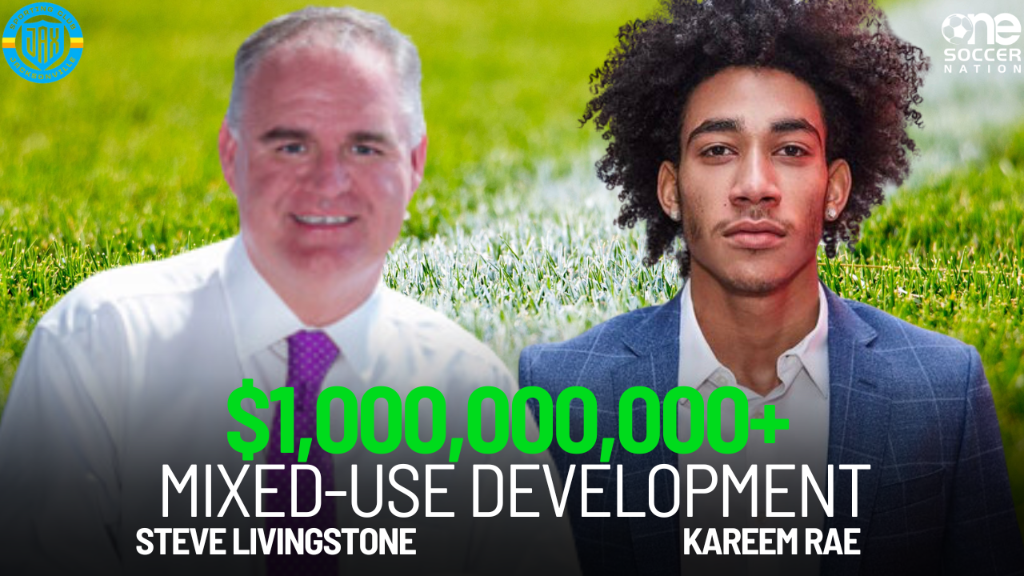
On a recent episode of The One Soccer Nation (OSN) Podcast, I sat down with Steve Livingstone, President of a new USL expansion project in Jacksonville, Florida, for one of the most transparent conversations I've had about what it really takes to launch a modern American soccer club at scale.
From Glasgow to Jacksonville: A Builder's Perspective
Steve's journey into the game started in the shadow of Celtic Park in Glasgow, long before his career took him through European soccer media, the NFL, and ultimately back to the sport via the Jacksonville Armada and now the USL. That mix of global football culture and American sports business discipline shows up clearly in how this project is being structured.
His core belief is simple: "If you're renting stadiums long-term, the business model doesn't work." That principle drives everything that follows.
A $1B+ Vision Anchored by Soccer (Not the Other Way Around)
The Jacksonville project is well north of $1 billion in total development value, anchored by a 15,000-seat soccer-specific stadium (expandable), a mixed-use commercial district surrounding the venue, programming for 100+ non-soccer events per year, men's and women's professional teams, and USL League Two, W League, and integrated youth pathways.
This is not "stadium first, hope later." It's a fully baked ecosystem where real estate, events, sponsorship, media, and community programming stabilize club finances across good seasons and bad ones. Steve was direct about past failures: "We launched before without our own stadium. That mistake can't happen again."
Why USL and Why the Process Takes Years
Jacksonville's path to securing market rights began around 2017 and took nearly three years before final approval. Because USL demands local ownership with long-term commitment, a credible stadium and land plan, youth and community integration, and financial capacity beyond just a team budget.
Steve made an important point that many first-time operators miss: "You're selling the city and the league at the same time. It's a chicken-and-egg process." Jacksonville's population has nearly doubled in the past decade, now approaching 2 million residents regionally, with an estimated 300,000 soccer enthusiasts making it one of the largest U.S. markets without top-tier professional soccer.
Ownership Philosophy: Stewardship Over Ego
One of the most compelling parts of the conversation was how Steve described the ownership group not speculators, not trophy collectors, but stewards of a community asset. The group includes Jacksonville-based leaders and former elite athletes including Fred Taylor, all aligned around long-term civic impact rather than short-term returns.
This mindset shaped a rare decision: the club name, colors, and identity were fan-driven, with 5,000+ survey responses and town halls across five counties, with branding inspired by the Jacksonville sunrise. As Steve put it: "Without the fans, football is nothing."
Real Estate as the Shock Absorber
One of the most important insights for investors came from how capital is structured. The approach: early-stage equity focused on the club and league entry, larger capital layers deployed into StadiumCo and DevCo, and cash flow from commercial real estate supporting team competitiveness.
This model mirrors successful precedents like Atlanta Battery, where non-match day revenue dwarfs game-day income. Steve emphasized this clearly: "Some seasons you win championships. Some you don't. Real estate allows you to weather every storm."
Timing Matters: Why the Next 5 Years Are Different
Jacksonville's launch window aligns with an unprecedented U.S. soccer cycle: the 2025 FIFA Club World Cup, 2026 FIFA World Cup, 2028 Los Angeles Olympics, and a potential 2031 Women's World Cup.
The club will also launch Jacksonville's first-ever professional women's sports team a milestone amplified by the city's first female mayor and growing support for the women's game. The women's campaign tagline says it best: "Making her story."
The Bigger Lesson for Investors and Operators
This conversation reinforced something I see repeatedly across successful USL projects: soccer alone is not the business, stadium control is non-negotiable, mixed-use development is the stabilizer, community buy-in is the accelerant, and long-term ownership mindset wins.
Jacksonville is not chasing relevance. It's building permanence. That distinction matters, especially for investors evaluating where American soccer is actually headed.
Listen to the full episode
Free Industry Report
2026 USL Championship Attendance: Down 7.5%
The USL Championship average fell to 5,148 per match while MLS and USL League One grew. We checked every club figure and found venue control, not market size, predicts crowds.
Read the Report