Industry Analysis
Brownsville's Playbook: Why City Alignment + City Land Can Compress the Timeline for Pro Soccer
If you want to understand why some USL expansion efforts move fast while others stall for years, stop looking first at rosters, badges, or social media.
Start with two gates that decide everything: Is the city leadership aligned and willing to partner? Is there land (and infrastructure) that can realistically support a stadium district?
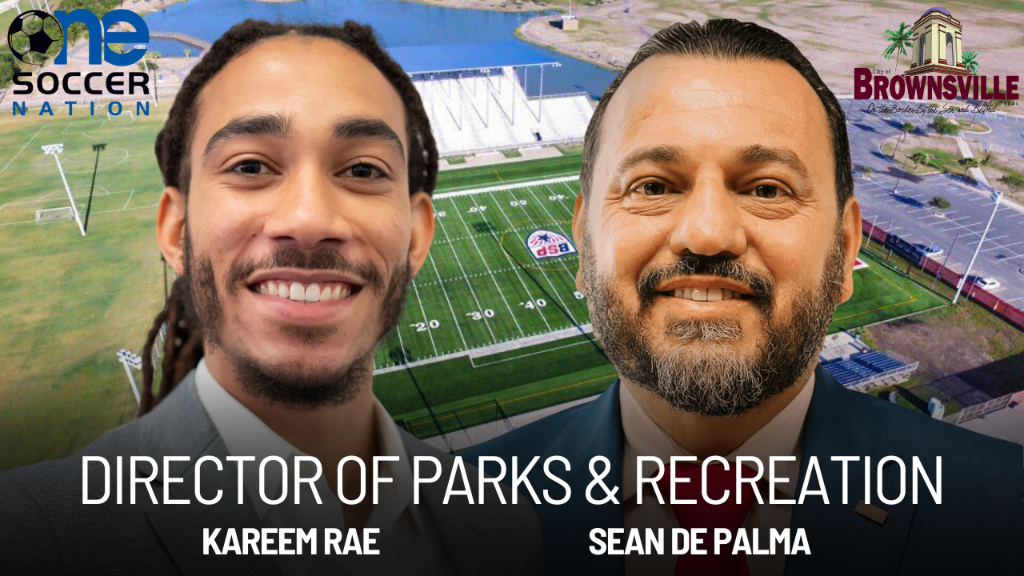
On a recent episode of The One Soccer Nation (OSN) Podcast, I sat down with Sean De Palma, Director of Parks & Recreation for the City of Brownsville, Texas, to unpack why Brownsville believes it can remove the two biggest hurdles most markets face.
This conversation is a case study in what happens when a city isn't a blocker, but a builder.
The moment that made me lean in at the USL Expansion Summit
We first connected in Spokane at the USL Expansion Summit during an investor roundtable. Ownership groups across the room kept repeating the same pain points: "We can't get city buy-in." "We can't find land." "We're stuck in approvals and politics." "Infrastructure costs are ballooning."
Then Brownsville's group stood up and effectively said: Those are not our hurdles. That's our starting advantage.
That's the thesis of this edition.
Investor takeaway #1: Municipal alignment isn't "nice to have" it's a force multiplier
Sean described Brownsville's posture clearly: the city is open for partnership when a project delivers real community and economic impact.
This matters because when cities are aligned, three things become easier: entitlements and approvals (fewer surprise "no's" late in the process), infrastructure coordination (roads, utilities, drainage, traffic, safety), and public trust (the community hears a consistent message, earlier).
In other markets, investors often end up buying private land and trying to "back-solve" city cooperation later. Sean explained why that path can get expensive fast: power capacity, stormwater requirements, road access, state highway coordination, and a long list of hidden technical dependencies that municipalities usually control.
Translation: even with private land, you still need the public machine.
Investor takeaway #2: City-owned land with existing infrastructure changes the entire math
Sean shared that Brownsville has an existing asset base the Brownsville Sports Park, roughly 118 acres with meaningful components already in place: multiple soccer fields (natural turf), baseball/softball diamonds, action sports amenities (skate park, pump track), courts and playgrounds, and an existing stadium (~4,200 capacity) used for events and entertainment.
But the key is not just the acreage it's what's already been proven on that footprint: event operations experience, traffic and crowd management, utility infrastructure already serving the site, multiple access routes and major arteries nearby, and housing growth in the surrounding area.
For investors and operators, this is what "de-risking" actually looks like.
Operator takeaway #3: "One City" isn't branding it's a delivery system
One of the strongest parts of the interview was Brownsville's One City model. Sean described a culture where departments and community partners work as a unified execution team instead of siloed units, with collaboration across the city, the school board, a nationally accredited zoo, and community planning, traffic, permitting, funding, and public input.
Why this matters for pro soccer: stadium districts and training sites are multi-department projects. "Slow yes" cities kill momentum. "Coordinated yes" cities protect timeline and budget. If you're building a stadium, you're not just building a venue you're managing a system. Brownsville is trying to operate like a system.
Market takeaway #4: Cross-border reach is a serious demand lever
Sean highlighted Brownsville's unique position as an international border city and a regional hub. From an operator lens, that opens up two important demand pools: the local population base, and a broader regional + cross-border flow tied to retail, education, and medical services.
If you're underwriting ticketing, sponsorship, and events, the question becomes: What is the real catchment area for this club, not just the census number? That's where Brownsville's location can become an accelerant.
Soccer culture takeaway #5: Adult soccer participation is an underrated predictor
A lot of markets talk about youth participation. Brownsville has that. What stood out is Sean's point that adult soccer is "king" locally relative to other adult rec sports. This matters because adults are the buyers, adults drive season ticket retention, and adults convert into supporter culture and match day habits. Youth growth is the long game. Adult demand is what stabilizes revenue now.
Strategy takeaway #6: The city is thinking beyond Wi-Fi it's thinking like an owner
One surprising segment: Sean described Brownsville's approach to technology infrastructure as ownership-oriented, not just vendor-oriented (example: buying into a network rather than simply purchasing service). The bigger signal is important: this is a city that wants strategic control of the platforms that shape growth. That mindset aligns well with stadium district logic, where control of land, rights, and adjacent development can define long-term upside.
Stadium district takeaway #7: Mixed-use is likely, but the framing matters
Sean was careful not to pre-commit, but he acknowledged the broader trend: the era of single-purpose, parking-lot venues is fading. The land is a "canvas" and the best outcome depends on alignment between the city, the operator, and the community. For investors, this signals a willingness to explore StadiumCo + DevCo logic. For operators, it signals the possibility of building a year-round destination, not a 17-match asset.
The meta lesson: "Right time" is code for "stacked tailwinds"
Sean framed Brownsville as being in a "renaissance" period growth, infrastructure spend, and industrial expansion (port activity, major employers, tech momentum, housing, hotels, municipal capital investment). You don't need every tailwind to be true for this to matter. You just need enough momentum that sponsorship conversations become easier, premium inventory has buyers, the city's quality-of-life narrative supports the project, and the club becomes a symbol of local rise.
That's the kind of environment where sports assets can scale faster.
Soccer Insider closing thought
If you're an investor or operator evaluating USL markets, consider this filter: If the city is aligned and the land is real, everything else becomes solvable. If the city is not aligned and the land is uncertain, everything else becomes a grind.
Brownsville is presenting itself as a market that starts with alignment and land not ends with it.
Comments
No comments yet. Be the first to share your thoughts.