Club Ownership
Atlético Dallas: Inside the USL Expansion Playbook for a Major Market Club
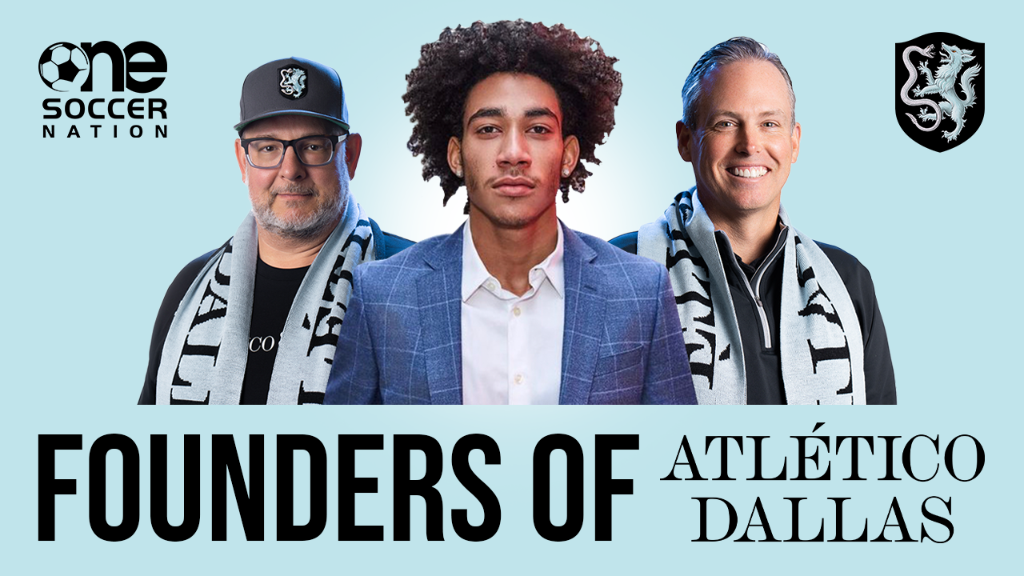
North Texas is becoming one of the most important battlegrounds in American soccer.
The region has 8 million people, 200,000+ registered youth players, and a deep footballing culture. It also already has an MLS club. Yet the USL has awarded an expansion franchise there - Atlético Dallas - led by lifelong friends Matt Valentine (Chairman & Founder) and Sam Morton (Co-Founder & Chief Commercial Officer).
Their story isn't just about launching a club. It's a real-time case study in how to build, finance, and position a professional team in a major market.
1. Why Dallas and Why Now?
Valentine first came into the USL ecosystem when he explored buying the Las Vegas Lights. The league said no to relocation but yes to expansion in Dallas. For him, the decision was obvious.
He and Morton grew up playing in the Dallas-Fort Worth area. They understand the youth landscape and the demographic shifts. Their thesis: there is space and demand for a second professional club if it is closer to the urban core.
FC Dallas plays 30-35 km away from downtown. Atlético Dallas is targeting a dense east-side corridor from Fair Park to Garland, an area with roughly two million residents.
"We can coexist," Morton said. "They'll have their audience, we'll have ours. We just need 10-15,000 people a couple of Saturdays a month."
Operator takeaway: Multi-team markets work when you define your specific geography and fan base instead of trying to "beat" the incumbent.
2. Brand Strategy: Built for the Demographic They Actually Serve
Dallas is nearly 50% Hispanic, and the club's identity leans directly into that. The name Atlético Dallas signals football immediately, with a crest that avoids the usual American tropes.
Notably, the badge doesn't include the club name or city. Some questioned that decision, but Valentine and Morton are thinking in decades, not seasons: "Our job is to make the crest valuable. If we do this right, people will see it and just know it's Atlético Dallas."
Operator takeaway: Identity is equity. A strong, distinctive brand can become an asset that compounds over time, especially in crowded markets.
3. Why USL? Flexibility, Upside, and Control
They had options: MLS, MLS Next Pro, or other leagues. They chose USL because of its open structure and entrepreneurial flexibility.
USL allows Atlético Dallas to control its commercial model, choose its kit provider, experiment with sponsorship inventory, and build toward Division One and potential pro/rel without changing ownership structures. For founders with a high risk tolerance and a clear vision, USL's framework matches their ambitions.
4. The Ecosystem: More Than Just a First Team
Atlético Dallas is assembling a multi-asset football platform. A $70M+ equivalent training complex in Garland features eight fields, a 2,500-seat mini-stadium, club HQ, and surrounding mixed-use development (hotel, retail, residential). They've studied projects like St. Louis City SC's stadium district and see a similar path in North Texas: privately driven, embedded in the urban fabric, and surrounded by real estate value.
They've also already partnered with a 3,000-player youth club that will rebrand under Atlético Dallas, with a national sponsor on the front of kit soon to be announced.
Valentine is explicit about one of his long-term goals: use future profits to reduce pay-to-play barriers inside the youth system.
Operator takeaway: The most compelling USL projects think in terms of ecosystems - training, youth, mixed-use real estate - and not just "team + stadium."
5. Capital Stack and Time Horizon
This is a serious capital play. Atlético Dallas has closed an initial friends-and-family round led by Valentine and early partners, attracted co-owners whose collective net worth "starts with a B," and structured a second raise designed to fund operations through 2029, giving them breathing room through launch and early seasons.
"You can make any business work in Excel," Valentine said. "The key is overestimating costs, respecting the burn, and not being forced into short-term decisions because you're undercapitalized."
Their goal isn't rapid cash extraction. It's stability, reinvestment into the sporting side, and subsidizing youth access.
6. Culture and Match Day: The Real Moat
Valentine's stated number one goal: "We want the best game day environment in a soccer stadium in the United States."
They're clear on the two audiences they must win: the hardcore supporters who live and die with the table, and the new fan who leaves saying, "I don't even remember the score, but that was incredible - when can we come back?"
They're already seeing early signs of traction: 5,000+ people at the brand launch in downtown Garland, an emerging supporters' group (the Blue Lunatics) building organic culture around the club, and rapid social growth after launch.
Operator takeaway: In USL, the sustainable competitive advantage isn't just recruitment or tactics - it's atmosphere. Culture is the moat.
Why Atlético Dallas Matters for Investors and Operators
Atlético Dallas is one of the clearest examples of where USL is heading: big-market expansion that complements, not fights, MLS; deep local roots combined with serious capital and professional leadership; a multi-asset model spanning training complex, youth club, future stadium, and mixed-use development; and a commitment to long-term value on the pitch, in the community, and on the balance sheet.
For anyone interested in how professional soccer clubs are built, financed, and scaled in the United States, this is a project to watch closely between now and 2027.
Listen to the full episode
Comments
No comments yet. Be the first to share your thoughts.