Club Ownership
USL Arkansas and the Builder's Playbook: Warren Smith on What Actually Drives Club Success
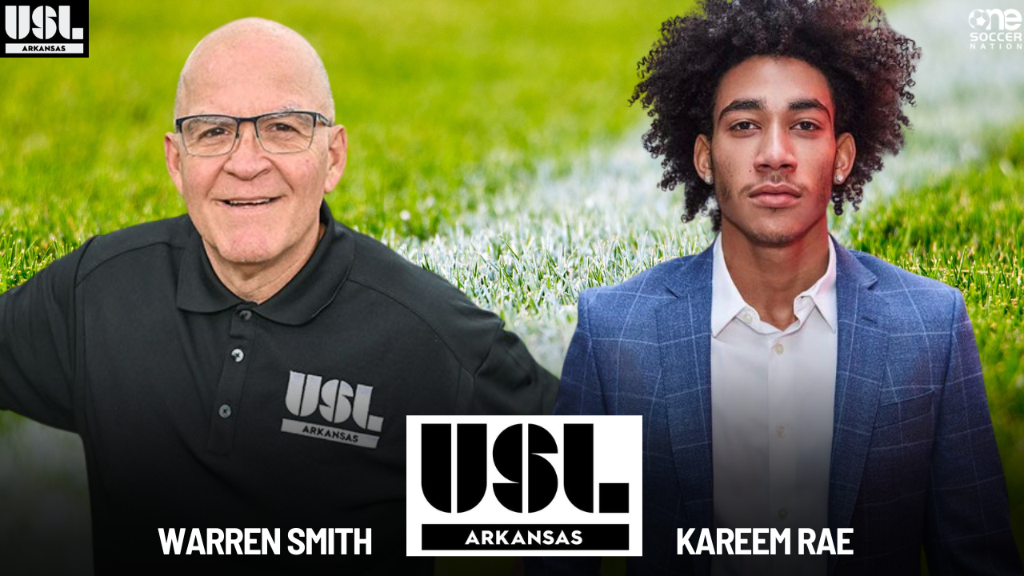
If you want to understand how professional soccer clubs get built, financed, and scaled in the U.S., you don't start with tactics on the field.
You start with market selection, stadium decisions, community buy-in, and a capital stack that can survive reality.
On The One Soccer Nation Podcast, I sat down with Warren Smith, Co-Founder of USL Arkansas and one of the most experienced builders in American soccer. Warren has helped bring projects to life across multiple markets and has operated at the intersection of team launches, stadium strategy, and fan-led brand building.
1. The Market Thesis Comes First: "Build for Tomorrow, Not Today"
Warren's core point: a market doesn't need to be massive today if the growth curve is undeniable.
For Northwest Arkansas, he highlighted four drivers that matter to ownership groups: growth rate (a smaller market with a trajectory that changes its category over 10-20 years), household economics (not just wealth at the top, but broad expendable household capacity paired with a lower cost of living), corporate gravity (major employers and supplier ecosystems that bring decision-makers into the region), and in-migration (when a large share of residents are newcomers, the market is more open to new brands and new rituals).
Operator takeaway: you can win in a "non-obvious" market when population growth + corporate concentration + quality-of-life economics are all working together.
2. Stadium Sizing Is a Demand Strategy, Not a Construction Flex
Warren's approach is the opposite of what many first-time ownership groups do. He prefers: start intimate, control supply, force demand, and expand only when season-ticket traction proves it.
USL Arkansas publicly discussed a 5,000-seat modular stadium concept expandable over time. The logic is simple: empty seats train fans that the product isn't urgent, while packed stands create momentum, scarcity, and identity. Expansion becomes a reward for the market, not a gamble against it.
Investor takeaway: a right-sized stadium protects early-year operating risk and increases long-term pricing power.
3. The Best Brands Are Co-Created, Not "Revealed"
Warren described one of the biggest unlocks he learned watching the Portland Timbers transition from low attendance to a real soccer culture: when operators don't fully understand the soccer audience, the only way to win is to listen obsessively.
His playbook for culture + brand creation: listening sessions across the region (chambers, youth soccer, adult soccer, general public, corporate leaders), starting with identity questions before soccer questions, building language that makes the club feel collectively owned, and focus groups that shape name, values, colors, and matchday rituals.
His Sacramento example was blunt: the fan base helped shape the identity, and that creates "connected tissue" that's hard to break.
Operator takeaway: a club is not a logo. It's a relationship system.
4. Principal Owner Reality: Why the "35%" Requirement Slows Everything Down
Warren explained why landing a principal owner takes longer than everything else. Under U.S. Soccer ownership standards, that person typically needs to represent a meaningful portion of the capital stack. That is a major commitment, requiring more diligence, more conversations, more alignment on timeline, stadium plan, and governance, and more scrutiny on long-term exit and community risk.
Investor takeaway: if you're raising for a club, expect the "anchor check" to be the slowest domino. Plan for it.
5. Mixed-Use Is No Longer Optional If You Want Modern Returns
One of Warren's clearest points: stadium-only models have become harder to justify, especially as public participation becomes more difficult.
Mixed-use matters because it creates additional revenue streams beyond match days, improves investor return profile, lets the club control the district experience, and builds a place people visit even when the team isn't playing.
His framing: it's not just "real estate for profit." It's place-making that makes the club more valuable.
Investor takeaway: the stadium is the anchor. The district is the compounding asset.
6. "Wall Street vs Main Street": Why USL Keeps Winning Local Attention
Warren drew a sharp contrast: big-league sports can become TV-deal-first, community-second. USL clubs win because they can still operate like community institutions with professional standards.
That balance is why USL clubs often outperform expectations locally - they are forced to be excellent at trust, access, and relationship-building.
Operator takeaway: USL is an operating league. If your front office isn't elite, the market won't carry you.
7. The 2026-2031 Runway Is Bigger Than Most People Are Modeling
Warren's view: we still underestimate what's coming. He pointed to a multi-event runway that can stack momentum: club competitions hosted in the U.S., the 2026 FIFA World Cup, the 2028 LA Olympics, and a potential 2031 Women's World Cup.
Even if you don't try to predict exact numbers, the strategic implication is clear: we're entering a decade where U.S. soccer attention becomes structurally harder to ignore.
Investor takeaway: assets acquired and built during this runway may benefit from demand acceleration and valuation expansion.
8. The Women's Game: The Deepest Under-Utilized Pipeline in U.S. Soccer
Warren made one point that every investor should sit with: there are tens of thousands of college women playing at high levels, and historically there haven't been enough domestic professional destinations.
With the growth of women's leagues and new platforms, the opportunity spans sporting (player pathway), commercial (community engagement + brand alignment), and strategic (long-term league value) dimensions.
His emphasis: do it in a way that's women-led, not "men trying to design women's soccer."
Operator takeaway: women's soccer isn't a side project. It's a major supply-and-demand correction in the U.S. sports landscape.
Soccer Insider Takeaways for Investors and Operators
If you're underwriting a soccer investment or launching a club, Warren's blueprint comes down to this: pick growth markets, not just big markets; start with a stadium strategy that protects demand; co-create identity with the community; expect the principal owner domino to be slow; use mixed-use to build durable returns; treat USL like an operating business, not a logo; model the next decade as a structural demand shift; and take women's soccer seriously as a core asset class opportunity.
Comments
No comments yet. Be the first to share your thoughts.