Club Ownership
Brett Johnson's USL Ownership Playbook: Why Stadium Control + Real Estate + Player Trading Is the Real Game
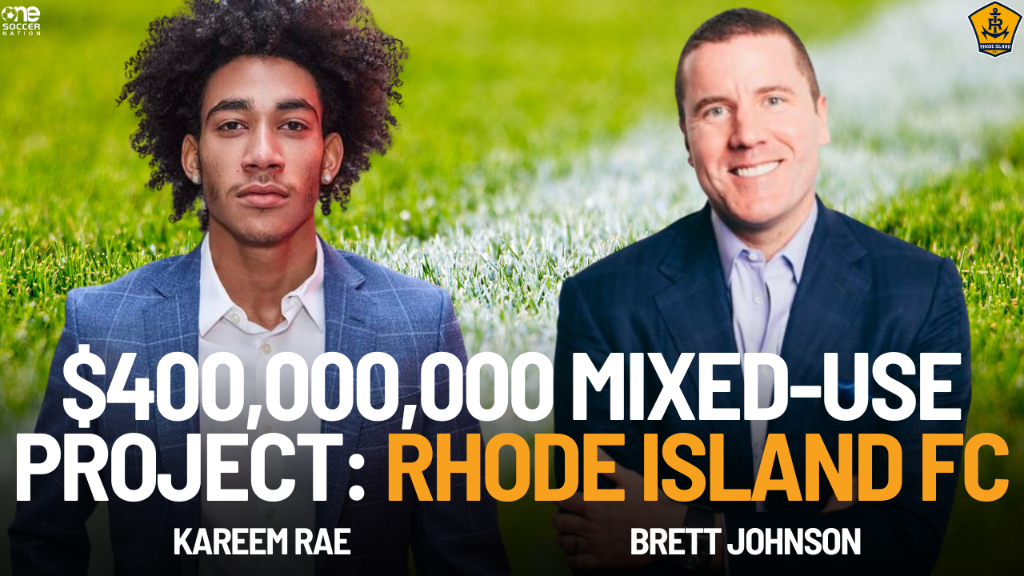
If you want to understand how professional soccer clubs are built, financed, and scaled, you don't start with formations.
You start with three levers that decide whether a club becomes a durable business or an expensive hobby: market selection, stadium control, and a capital stack that can survive reality.
On The One Soccer Nation (OSN) Podcast, I sat down with Brett M. Johnson - Chairman & Co-Founder of Rhode Island FC, Director/Shareholder at Ipswich Town FC, and an early USL builder through Phoenix Rising - to unpack what actually drives returns in modern soccer ownership.
1. Why Brett Chose USL Over MLS: The Balance-Sheet Reality
Brett gave a blunt framing that every investor should internalize: MLS has built an incredible product, but the entry price has moved into a different universe. When franchise costs and stadium costs stack up, you're often looking at a nine-figure to billion-dollar commitment before you've built a real operating machine.
His point wasn't "MLS is bad." It was: the economics need to match the ownership group's balance sheet.
That's why he's become increasingly bullish on USL - especially when you can pair a club with stadium control and development rights.
2. Phoenix Rising: The "USL-First" Pathway That Shaped His Thesis
Brett's first soccer investment came from a simple observation: Phoenix was a massive, fast-growing market with strong demographics for soccer, and it wasn't on MLS's expansion list.
He didn't overcomplicate it. He invested in the existing USL club, rebranded and rebuilt the business with new partners, and created a more legitimate match day product - including a modular stadium approach that proved you can build meaningful infrastructure without MLS-level capital requirements.
The deeper lesson: USL can be a deliberate strategy, not a stepping stone.
3. The Stadium Isn't Optional: It's the Operating System
Brett kept coming back to the same idea: if you want real business performance, you need control of the venue.
Because the stadium changes everything - match day revenue capture, sponsorship inventory you actually own, scheduling control, non-soccer programming (concerts, rugby, lacrosse, community events), premium seating and hospitality, and the ability to build an always-on brand experience.
He emphasized that the future of USL economics will be defined by how many clubs transition into soccer-specific, controlled venues over the next five years.
4. Rhode Island FC: How a Club Becomes a Catalyst for a $400M District
Rhode Island FC is the most complete expression of Brett's thesis. The story starts with a market disruption: Rhode Island's AAA baseball team announced it was leaving the state. Brett moved quickly to secure USL Championship rights and began building alignment with state and city leadership.
From there, it became a true public-private partnership, anchored by a stadium project (phase one just under 11,000 seats), a long-term land and control structure, and mixed-use development rights around the stadium - housing plus broader district buildout.
His framing was simple: prime land was sitting under-utilized. The stadium and club become the catalyst that makes the broader development investable. This is the "work, live, play" model U.S. soccer keeps moving toward, because it creates multiple pathways to profitability, not just one.
5. Timeline Truth: Big Projects Aren't Linear
Brett shared something investors don't hear enough: Rhode Island is six years into the journey.
In that time, they faced a pandemic pause, construction and labor cost spikes, interest rate increases, and broader market volatility.
The takeaway for ownership groups: if your capital stack can't tolerate delays, macro shocks, and re-pricing, you're not underwriting a sports infrastructure project. You're underwriting hope.
6. Promotion and Relegation: The Strongest Engagement Engine in Sports
Brett is one of the most vocal U.S.-based advocates for promotion and relegation, and his argument is operator-focused, not ideological: it makes every match meaningful, increases urgency for owners to build properly, and deepens fan emotion because the stakes are real.
His core point stands: USL can differentiate itself structurally in a way no other major American league can.
7. The Underrated USL Lever: Player Trading Can Materially Move the Needle
Brett highlighted a reality more investors are starting to notice: USL has a real opportunity to develop young talent, give players meaningful minutes in front of serious crowds, and participate in the transfer market.
When you start stacking occasional seven-figure transfer outcomes alongside stadium economics, sponsorship growth, and a development district, the model stops being "club ownership." It becomes a portfolio of connected assets.
8. The "Democratization" of Sports Investing Is Accelerating
Brett described how sports investing increasingly allows participation at levels that are simply unrealistic in the NFL/NBA/MLS universe. That expands the pool of potential ownership capital, especially in USL markets where local investors actually want a seat at the table.
USL isn't just selling a team. It's selling the chance to help build a lasting civic asset.
9. 2026 World Cup: The Next Wave of Conversion Is Coming
Brett sees 2026 as a mass adoption catalyst - not just for viewership, but for participation. His belief: the tournament will inspire the next generation of players and fans, and the downstream effect will lift the entire soccer economy, including domestic leagues and development systems.
What Investors and Operators Should Take From This
If you're evaluating a soccer investment, ask these questions first: Do we control the stadium, or are we renting our business model? Do we have development rights or adjacent revenue engines, or are we only betting on tickets and sponsors? Is the market thesis strong enough to survive 5-7 years of volatility? Is there a credible pathway to player trading upside? Does the ownership group's balance sheet match the ambition?
Because "owning a club" is not the strategy.
Owning the right system around the club is the strategy.
Listen to the full episode
Comments
No comments yet. Be the first to share your thoughts.