Thought Leadership
Decoding Success in Soccer: Leadership, Sustainability, and Innovation
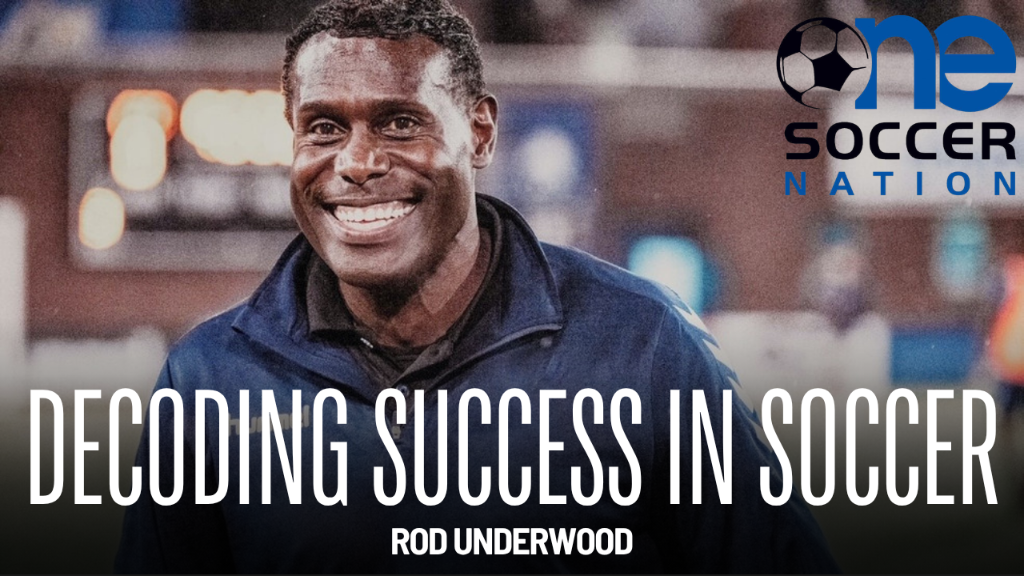
In an era defined by data, capital flows, and global competition, the most misunderstood competitive advantage in professional soccer is not tactics, analytics, or even infrastructure.
It is leadership.
In a recent conversation on The One Soccer Nation (OSN) Podcast with Rod Underwood, a veteran coach and sporting director with experience across clubs such as Portland Timbers and Sacramento Republic FC, a consistent theme emerged:
Sustainable clubs are not built from systems first. They are built from people first.
Leadership Is the System
Across decades in coaching, academy development, and executive roles, Underwood's philosophy challenges a common industry bias toward structure over substance.
Most clubs obsess over tactical systems, recruitment models, and data frameworks. Few prioritize emotional intelligence, communication dynamics, and psychological safety.
Yet, according to Underwood, leadership is the multiplier.
"It doesn't really matter what tactics you decide to use… leadership and connectivity with people determine performance."
What This Means for Operators
For investors and executives, this reframes hiring. Technical expertise is a baseline requirement. Leadership capability is the differentiator. Emotional intelligence is the unlock.
Clubs that get this right accelerate everything else: performance, retention, and culture.
The Integrated Club Model: Ending the Civil War
One of the most persistent inefficiencies in football organizations is internal misalignment.
The business side believes it drives the club. The technical side believes the same. This creates friction that slows decision-making and limits growth.
Underwood reframes the issue: there is no hierarchy. There is only interdependence.
A truly integrated club understands that ticket sales directly influence recruitment budgets, player behavior impacts sponsorship value, and performance affects media visibility and commercial growth.
High performance must exist across every department, not just on the pitch. For ownership groups, this means evaluating departments not in isolation, but as a connected system.
The Academy as Infrastructure, Not Cost
In emerging markets and developing ecosystems, Underwood highlights a critical insight: academies are not expenses. They are economic engines.
At Montego Bay United FC, the focus was not just player development, but community transformation.
A successful academy creates first-team players, transfer revenue opportunities, economic uplift for families, and community belief and identity. This is particularly powerful in developing markets where football represents a pathway out.
For investors, this reframes academy ROI from short-term cost to long-term asset creation.
Data vs. Decision-Making
Modern football is flooded with data. The challenge is no longer access. It is application.
Underwood's perspective is clear: not all data is useful, more data does not equal better decisions, and clubs must define what matters internally.
"The right data is what's best, not more data."
Elite organizations filter aggressively, align data with identity, and use data to support, not replace, human judgment. This is where leadership and analytics intersect.
Recruitment Beyond Talent
Most recruitment models focus on technical ability and tactical fit. Underwood prioritizes something different: character first.
His process includes deep personal background conversations, understanding adversity and mindset, and evaluating how a player contributes to culture.
"Good people make better players."
In a long season, culture sustains performance, character stabilizes the locker room, and trust drives execution. For clubs aiming for longevity, recruitment is as much psychological as it is technical.
Stadiums as Community Infrastructure
The modern stadium is no longer just a venue. It is a community anchor.
Underwood frames it as: "A unifier of the community."
A well-designed stadium ecosystem can include residential development, retail and hospitality, and public spaces. This creates year-round revenue, increased land value, and emotional connection with the community. For ownership groups, this is where sports meets real estate strategy.
The Core Formula for Sustainable Clubs
Distilling the conversation, a clear hierarchy emerges.
First, people: leadership quality, cultural alignment, emotional intelligence. Second, vision: clearly defined mission, constant communication, embedded across all operations. Third, business: revenue generation, infrastructure investment, long-term planning. Fourth, performance: technical execution, player development, competitive results.
Most clubs reverse this order. The best clubs build in this sequence.
Final Thought
As global soccer continues to professionalize and scale, the gap between clubs is no longer just financial. It is organizational.
The clubs that win long-term will not be those with the biggest budgets. They will be those that understand a fundamental truth:
Football is a people business before it is a performance business.
If you haven't watched the full episode yet, it's worth your time.
Listen to the full episode
Comments
No comments yet. Be the first to share your thoughts.