Stadiums
Inside the $175M Sacramento Republic FC Stadium Project: A Blueprint for Modern Soccer Infrastructure
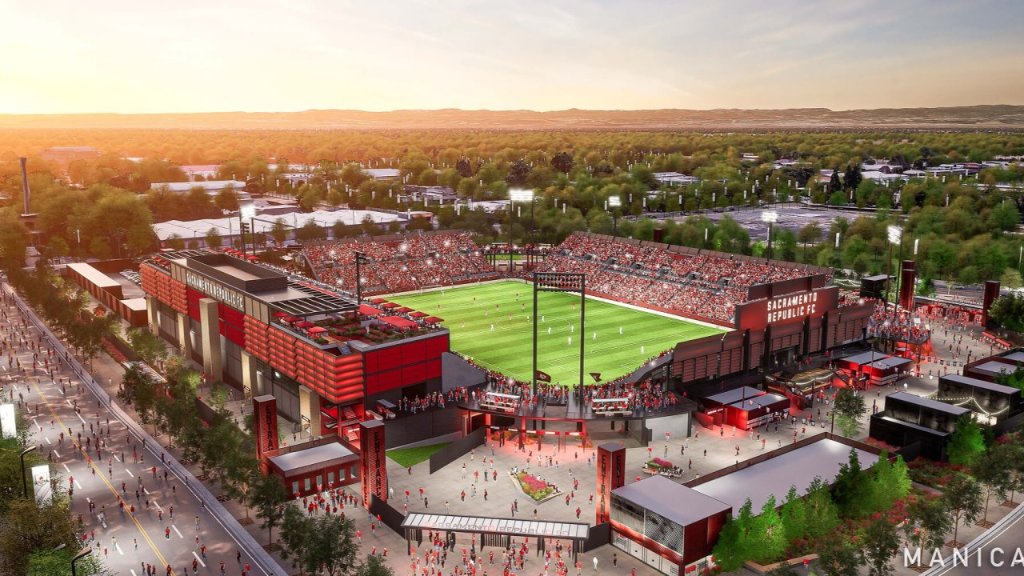
The race to build next-generation soccer venues in the United States continues to accelerate - and few projects illustrate the future better than Sacramento Republic FC's new stadium rising in the historic Railyards district. For investors and operators, the project provides a real-time case study on how USL clubs are leveraging stadium-anchored development, public-private collaboration, and long-term urban planning to scale both sporting success and local economic impact.
1. The Railyards: A Development District Built for Sports-Led Growth
Sacramento's Railyards is one of the largest urban infill projects in the United States - 200+ acres being transformed into a mixed-use district of housing, offices, medical facilities, retail, and entertainment.
The Republic FC stadium is a central anchor within this transformation. Its placement isn't accidental: stadiums succeed most when they are part of a larger ecosystem capable of generating year-round foot traffic, tax revenue, and community activity.
Strategic advantages of the Railyards site include a walkable connection to downtown Sacramento, integrated transit infrastructure, the ability to layer adjacent mixed-use development (restaurants, bars, residential, public plazas), and a framework that elevates the stadium as a civic hub, not a standalone asset. This mirrors the approach used in Louisville, Colorado Springs, and the soon-to-open Rhode Island FC project - sports-led districts outperform isolated venues.
2. A Stadium Designed to Evolve With the Club
Sacramento's stadium plan prioritizes adaptability. The venue will initially seat roughly 12,000-15,000, with flexibility for future expansion depending on demand. This phased approach is becoming a standard model for clubs aiming to scale operations sustainably while staying aligned with league requirements and market capacity.
Key design features include an intimate bowl design tailored for soccer, steep seating that enhances atmosphere and sight lines, fan-centric amenities such as safe-standing sections and modern hospitality spaces, and a layout that supports multiple revenue streams beyond match days. The message: successful clubs design stadiums not just for today's crowds, but for tomorrow's opportunities.
3. Turner Construction's Role: Deliverability Meets Expertise
Turner Construction - one of the most experienced builders of sports venues in the world - has been tapped to lead the stadium build. Their involvement signals credibility and executional confidence, especially in a sector where construction delays and cost overruns are common.
Turner's recent sports portfolio includes MLS and USL stadiums, NFL and NBA infrastructure projects, and large-scale civic and entertainment complexes. For operators and investors, this partnership underscores a crucial factor: developer and contractor selection directly influences stadium reliability, cost control, and long-term asset performance.
4. The Fabric of Community Impact
Republic FC has consistently framed the stadium not merely as a sports venue but as a community anchor. Their messaging emphasizes job creation (construction and permanent), local business activation, youth soccer programming, public space integration, and a home for regional gatherings and cultural events. This aligns with a broader shift where municipal leaders view soccer stadiums as drivers of district revitalization - not just sports facilities.
5. Why This Matters for Investors and Operators
Sacramento's project illustrates several larger themes shaping modern soccer development in North America.
Stadiums work best when paired with district economics. A venue surrounded by housing, food and beverage, retail, and public spaces outperforms a suburban, standalone stadium every time. Flexible capacity is now a best practice - clubs avoid overbuilding, start within market fit, and expand as revenue matures. Major contractors reduce project risk; experienced partners attract investor confidence and municipal support. Community integration isn't PR, it's strategy - cities want projects that activate neighbourhoods and strengthen the civic fabric. The USL is leaning heavily into real estate-driven expansion, and Sacramento's model mirrors the league-wide trend: stadium-anchored development is becoming a core pillar of club growth and valuation.
6. What to Watch Next
As Sacramento moves toward its planned stadium debut, key milestones for observers include finalized construction timelines, updated renderings and design refinements, mixed-use development phases around the stadium, pre-sale and premium hospitality demand, and city-club collaboration on district activation. For investors, these signals provide early indicators of project velocity and long-term ROI potential.
Final Thought
Sacramento Republic FC's new stadium is more than a venue - it's a blueprint. As USL Championship and USL Super League clubs continue to invest in soccer-specific infrastructure, Sacramento offers a replicable model for aligning on-field ambition with real estate value creation.
For operators evaluating stadium projects and investors studying club growth models, this development deserves close attention.
Comments
No comments yet. Be the first to share your thoughts.