Industry Analysis
USL Premier: The Next Frontier in U.S. Professional Soccer - What Investors and Operators Need to Know
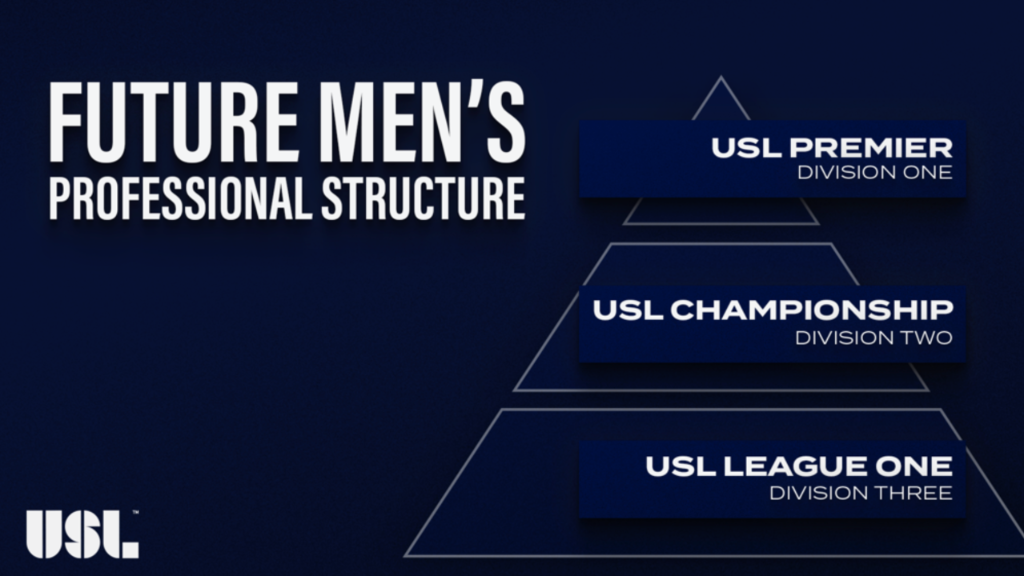
The United Soccer League (USL) has taken a decisive step that could fundamentally reshape the professional soccer landscape in the United States. With the announcement of USL Premier, the league has outlined a vision that introduces a new Division One men's competition at the top of a fully interconnected, three-tier professional system.
For investors, operators, and city stakeholders, this is one of the most consequential structural developments in American soccer in decades.
A Three-Tier, Integrated Professional Soccer Pyramid
USL Premier will sit atop a newly aligned professional structure: USL Premier (Division One), a national single-table league targeting 20 clubs with a planned launch in 2028; USL Championship (Division Two), a unified national competition featuring 20 clubs; and USL League One (Division Three), a regionalized league designed to foster local rivalries and manage operating costs.
Crucially, USL has committed to implementing promotion and relegation across these divisions, creating the first performance-based professional soccer ecosystem in the United States.
This approach aligns far more closely with global football models than the traditional franchise structure that has historically defined U.S. sports.
Why This Matters for Investors
1. A Scalable, Performance-Driven Framework
USL Premier introduces a system where club value is influenced not only by market size and brand, but by sporting performance.
For investors, this creates clear tier differentiation across the professional landscape, the ability to model upside based on competitive success, and a pathway for asset appreciation beyond expansion-fee inflation. This structure rewards execution, not just entry.
2. Early Entry into a New Division One Platform
While Major League Soccer remains the most established Division One league, USL Premier represents a parallel top-tier opportunity with a different economic and governance profile.
Early entrants may benefit from lower entry valuations relative to long-term upside, market exclusivity in cities not served by MLS, and first-mover brand advantage as the league establishes national relevance. USL has confirmed that applications are under review, with inaugural clubs to be announced in the near future.
3. Stronger Commercial and Media Alignment
A national single-table format simplifies scheduling, storytelling, and broadcast packaging. From a commercial standpoint, this structure improves inventory consistency for sponsors, enhances national media appeal, and allows for bundled partnerships across divisions.
As media consumption continues to globalize, alignment with internationally familiar formats becomes increasingly valuable.
4. Competitive Integrity and Talent Value
Promotion and relegation introduces real consequences for performance, raising the competitive standard across all levels. For clubs and investors, this can translate into increased match day relevance, higher player development value, and clear incentives to invest in technical staff, academies, and infrastructure.
Strategic Considerations for Club Operators
Participation at the USL Premier level will require stadium and training infrastructure capable of supporting national competition, capital reserves to manage performance-based volatility, and strong front-office leadership and governance. This is not a passive investment environment.
With limited spots expected in the inaugural lineup, timing and preparedness matter. Clubs with strong local ownership groups, municipal or regional support, and clear long-term development plans will be best positioned to secure entry.
Leadership Signal
The appointment of Tony Scholes, former Chief Football Officer of the English Premier League, as President of USL Premier is a clear signal of intent. This move underscores USL's commitment to importing global best practices in competition management, governance, and league strategy.
Bottom Line
USL Premier is not just a new league. It represents a structural shift toward a merit-based professional soccer system in the United States.
For investors and operators, it presents a new Division One entry point, a scalable competitive framework, and long-term value creation tied to performance, infrastructure, and market execution.
Those who understand the implications early and align their capital and operational strategy accordingly will be best positioned as this new era of American professional soccer takes shape.
Comments
No comments yet. Be the first to share your thoughts.