Industry Analysis
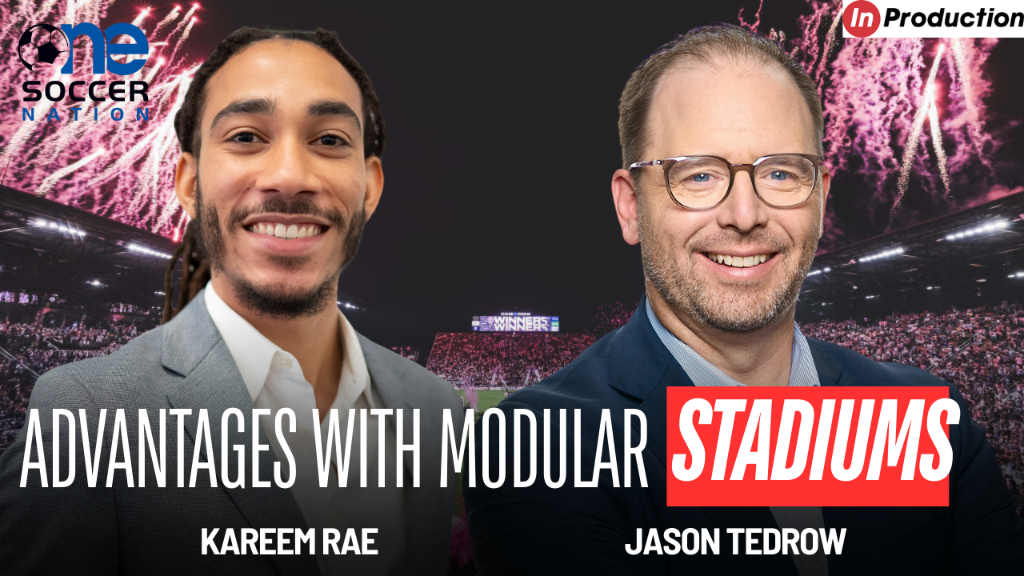
Inside the Modular Stadium Playbook with Jason Tedrow, President & CEO of InProduction
For investors and operators evaluating speed to market, capital efficiency, and future-proof stadium strategy, modular infrastructure is no longer a stopgap. It is a competitive advantage.
In this edition of Soccer Insider, I break down key insights from my recent conversation on The One Soccer Nation (OSN) Podcast with Jason Tedrow, President & CEO of InProduction - the largest venue transformation and event services company in North America. With more than 1,000 events delivered annually across USL stadiums, college football, F1, PGA, and global mega-events, Jason sits at the center of how modern venues are built, expanded, and monetized.
Why Modular Stadiums Are Winning in U.S. Soccer
Modular is no longer about "temporary." It is about optionality.
Jason explained that modular stadiums are increasingly the preferred solution for USL owners because they allow clubs to open faster, spend less upfront, expand only when demand proves itself, and preserve capital for roster, marketing, and operations.
For emerging clubs, that flexibility can determine whether a project survives its first five years.
Speed to Opening Day: What's Actually Possible
One of the most eye-opening benchmarks from the conversation: a 14,000-seat stadium built in roughly 65 days, the ability to add 1,000-2,000 seats in season depending on site conditions, and full stadium relocation and expansion after multiple seasons.
For ownership groups navigating land approvals, entitlement risk, or phased development, modular compresses timelines without sacrificing quality.
The Cost Conversation Owners Need to Have Earlier
The first three questions Jason hears from clubs are consistent: what does it cost, how fast can it be delivered, and what don't we know yet.
Modular often wins on all three - not just on headline cost, but on avoiding overbuilding before revenue is proven. Owners can start at 4,500 to 5,000 seats, sell out consistently, then scale with confidence.
That sequencing matters to lenders, cities, and investors alike.
Quality, Atmosphere, and the "Permanent Feel"
A common misconception is that modular means compromised experience. Jason addressed this directly.
Modern modular stadiums use engineered steel substructures, high-end seating and hospitality, custom supporter sections with rail seating, and broadcast-ready press and premium areas.
Many fans and even players cannot tell the difference between modular and permanent builds. Inter Miami's early stadium is a prime example.
Expansion Triggers: When to Add Capacity
Rather than guessing, clubs track attendance averages, season-ticket waitlists, premium and hospitality sell-through, and special event demand such as playoffs or finals.
When those indicators align, modular allows clubs to react quickly - sometimes within a single season.
Reusability, Resale, and Long-Term Asset Value
One of the most under-discussed advantages is asset longevity. Structural steel often carries a 20 to 25-year lifespan. Seats from the Atlanta Olympics are still in circulation. Buy-back and reuse clauses are available. Infrastructure can be redeployed across sports and live events.
From an investor perspective, modular reduces stranded capital and improves downside protection.
The Bigger Picture: Future-Proofing the Stadium Investment
Jason framed it best with one idea: future-proofing.
The most successful clubs design for expansion without landlocking the site, multi-event usage beyond matchdays, and flexibility if relocation or redevelopment becomes necessary.
In the USL ecosystem, where cities, leagues, architects, and suppliers collaborate closely, modular stadiums are increasingly the default rather than the exception.
Final Thought
For ownership groups entering new markets, the stadium decision is not just about capacity. It is about risk management, capital discipline, and speed.
Modular stadiums give clubs room to grow with their communities, not ahead of them.
Listen to the full episode
Comments
No comments yet. Be the first to share your thoughts.