Thought Leadership
Union Omaha's 'Off-Field Edge': What Winning USL Clubs Are Doing Differently
In U.S. lower-division soccer, it's easy to obsess over tactics, transfers, and match day results.
But the clubs that consistently win and compound their value tend to operate with a different playbook: player care as performance infrastructure, culture as a competitive moat, and stadium strategy as the biggest lever on the P&L.
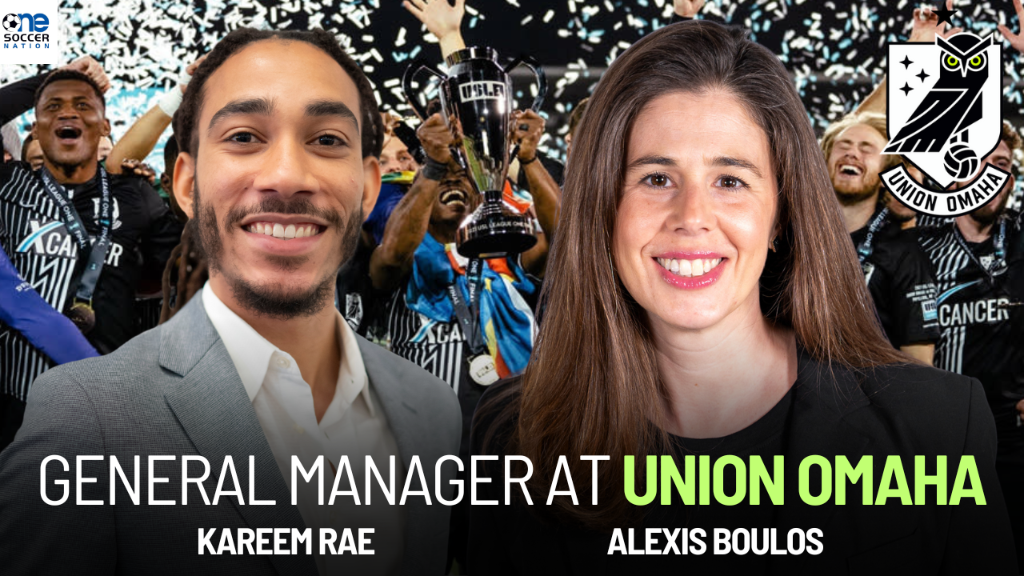
On The One Soccer Nation (OSN) Podcast, I sat down with Alexis Boulos, General Manager of Union Omaha, to unpack what building a high-performing USL League One club actually looks like behind the scenes - especially when you're doing it with a lean front office and a shared stadium. Union Omaha has won USL League One titles in 2021 and 2024, which is why you'll see two stars on the shirt.
1. Winning Culture Is Engineered, Not Hoped For
Union Omaha's on-field success starts with intentionality off the pitch.
Alexis described a club environment built around nutrition and recovery as priorities (not add-ons), including strong medical partnerships, team cohesion by design including player living arrangements that encourage community, and human-first leadership where the goal is to understand players beyond the athlete identity.
For operators: culture isn't "soft." It's a performance system.
2. Go Beyond the CBA If You Want to Outperform Your Spend
One of the most practical moments in the episode was Alexis' point about clubs choosing to go above and beyond baseline league requirements - because it impacts performance, retention, and trust.
When you're in a cost-controlled league, you can't always win by outspending. You win by out-operating.
3. Stadium Control Is the Biggest Unlock on the P&L
Alexis didn't sugarcoat it: a permanent home is a growth requirement, not a luxury.
A club-owned or club-controlled venue impacts match day revenue and inventory (premium, concessions, sponsorship categories), calendar control (events, friendlies, community use), and long-term expansion options (women's team, academy, additional programming).
Stadium update: Union Omaha and the City of Omaha announced plans in November 2025 for a new downtown stadium and mixed-use district, with a target opening for the 2028 season and a potential 2026 groundbreaking (pending approvals).
4. The Hidden Grind: Shared Venue Operations
Most fans never see this, but it matters. Union Omaha has operated in a shared baseball venue, which creates significant operational complexity - especially when flipping surfaces with real turf work and tight turnarounds.
Alexis described a process that can take multiple days and requires constant coordination across grounds, compliance, coaching, and scheduling. That complexity is one reason why stadium control isn't just about revenue - it's about reliability.
5. A Small Front Office Changes Everything
In League One, you're not running a 40-person commercial staff. Alexis described a lean operation where leadership isn't "overseeing" - they're doing: match day ops, partnerships, community activations, scheduling coordination, and more.
Operator lesson: your org chart needs to match your league economics. Your systems must compensate for limited headcount.
6. Marketing Isn't Just About Soccer - It's About the Experience
Alexis made a sharp point: in many U.S. markets, you don't yet have enough "hardcore soccer supporters" to fill the building every week.
So growth comes from family-friendly match day programming, themed nights (community heritage nights, pet-friendly activations), and telling stories that connect beyond the sport. This is how you turn casual fans into repeat buyers and repeat buyers into community advocates.
7. Cup Matches Prove Brand Value and Widen the Funnel
Alexis highlighted hosting Sporting Kansas City in the U.S. Open Cup at UNO's Caniglia Field in 2024. But the bigger point for investors and operators: these moments create outsized attention.
Union Omaha's Open Cup history includes becoming the first USL League One club to defeat an MLS team - and doing it twice during their 2022 run. Cup storytelling matters. It expands the top of the funnel, validates competitiveness, and strengthens sponsorship narratives.
8. Sponsorship That Works Looks Like Partnership, Not Logo Rental
Alexis called out Centris Federal Credit Union as a holistic partner - going beyond branding into activation, employee engagement, and community integration. Union Omaha even revealed a 2024 jersey at a Centris-hosted launch event.
That's the play: sponsorship as distribution, experience, and alignment - not "signage and pray."
9. Leadership Takeaway: Calm, Clarity, and Communication Win
One of the strongest leadership themes from Alexis: listen first, solve problems across stakeholders, keep the room steady when pressure rises, and remember - most front office problems are solvable with strong communication.
That's not just culture talk. It's operational advantage.
Listen to the full episode
Comments
No comments yet. Be the first to share your thoughts.