Club Ownership
Russell Westbrook Invests in OKC for Soccer: Celebrity Capital or Structural Signal?
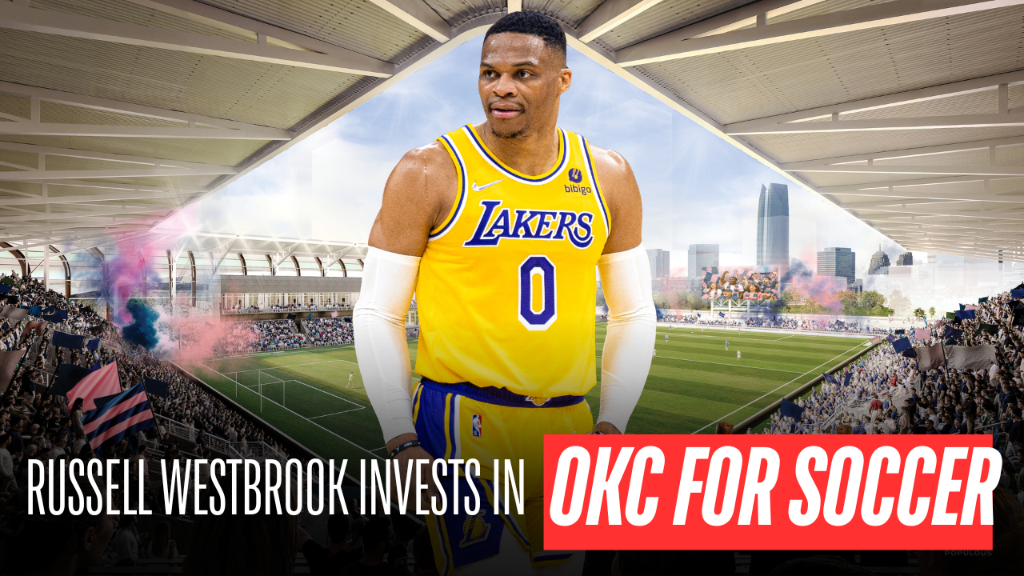
Russell Westbrook has joined the ownership group of OKC for Soccer, the club preparing to enter the USL Championship. His involvement places one of Oklahoma City's most recognizable athletes alongside a growing coalition of investors positioning the city for professional soccer at scale.
Beneath the headline, this is not merely a celebrity endorsement. It is a capital formation strategy built around civic identity, cross-sport brand equity, and long-horizon infrastructure positioning.
For investors and operators, the timing matters. Lower-division professional soccer in the United States is transitioning from passion-led projects to structured, institutional builds anchored in real estate, capital discipline, and community integration.
Primary Signal: Civic Equity Is Becoming Investment Capital
Westbrook is synonymous with Oklahoma City through his tenure with the Oklahoma City Thunder. His identity is tied to the city's modern sports era.
When an athlete of that stature joins a USL ownership group, the asset class shifts perception. It moves from minor league expansion to city-backed civic project.
This is strategic for three reasons: local trust arbitrage, media acceleration, and capital signaling.
This mirrors broader trends seen in American soccer where high-profile athletes have diversified into club ownership. The difference here is geographic alignment - Westbrook's connection to Oklahoma City is authentic and durable.
Secondary Effect: Multi-Sport Capital Stack
Oklahoma City is not building soccer in isolation. The city already has strong professional sports infrastructure through the NBA.
The structural question becomes: can soccer plug into existing sponsorship networks, hospitality relationships, and premium buyers cultivated through the Thunder ecosystem?
If executed correctly, soccer benefits from shared corporate relationships, cross-promotional leverage, premium seating cross-sales, and civic momentum tied to downtown development.
This lowers the go-to-market friction compared to greenfield markets without established sports business networks.
Operator Lens: Brand Is Not Operations
Celebrity ownership does not solve stadium economics, training infrastructure, youth development pathways, technical leadership, or revenue diversification.
The USL Championship is competitive and operationally demanding. Clubs that succeed structurally align four pillars: stadium control or favorable lease structure, strong local ownership governance, commercial execution discipline, and an integrated player development pipeline.
Westbrook's involvement strengthens governance credibility and capital access. Execution will determine the rest.
League and Market Lens: USL's Expansion Model Is Maturing
The USL Championship continues expanding into mid-sized markets where MLS does not operate or where Division I access is limited.
The strategic shift in USL expansion over the past five years includes larger and more sophisticated ownership groups, real estate-anchored stadium planning, institutional governance frameworks, and athlete-investor participation.
Oklahoma City fits the demographic and civic profile USL targets: stable population growth, diversified economy, strong downtown development, and proven sports appetite.
Westbrook's investment reinforces USL's positioning as a credible professional tier, not merely a developmental league.
Risk Register
The key risks ranked by severity: stadium execution risk, attendance volatility, overreliance on celebrity halo, and league structural changes.
If Westbrook had not invested, the project would likely still be viable assuming capital sufficiency and stadium progress. However, timeline velocity, sponsor conversations, and media lift would be meaningfully slower. The investment accelerates perception and potentially compresses time-to-market confidence.
What This Means
For investors: civic athletes with authentic geographic ties represent asymmetric value in lower-division club ownership. Brand equity converts into capital efficiency when paired with disciplined governance.
For operators: celebrity partners amplify reach, but stadium economics and matchday revenue discipline determine sustainability.
For the market: USL expansion is increasingly structured around coalition ownership models, not single-operator risk.
Comments
No comments yet. Be the first to share your thoughts.