Club Ownership
Ownership, Sustainability, and the Structural Divide in Global Football
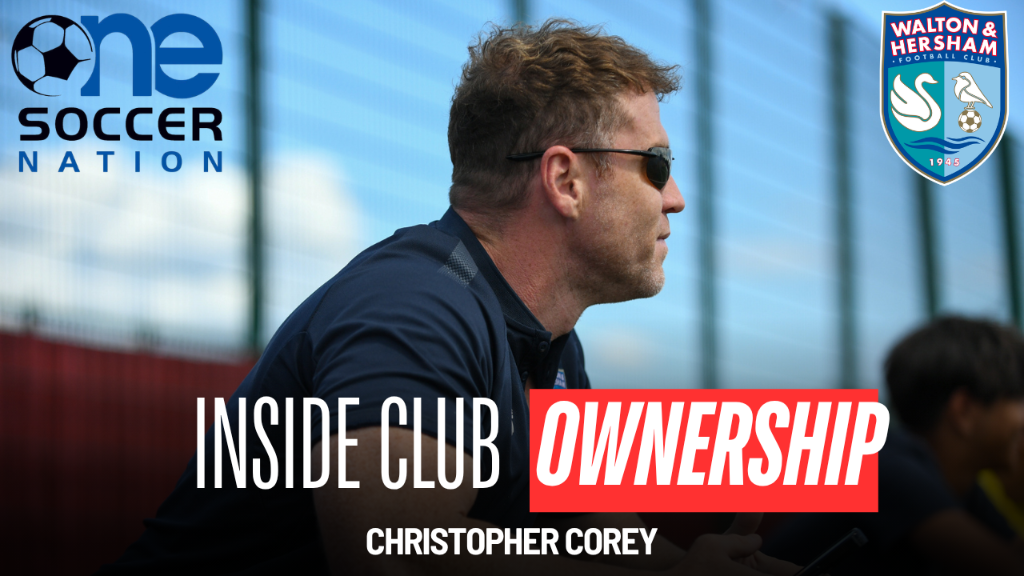
Featuring Christopher Corey, Owner & President, Walton & Hersham FC
The global soccer industry is entering a defining era where ownership models, league structures, and financial discipline are being tested in real time. As capital flows into the sport, the difference between building a club and building a sustainable institution has never been more important.
Christopher Corey offers a rare operator-level perspective from inside both the U.S. and UK ecosystems, highlighting not just what works, but what fundamentally needs to change.
The Reality of Owning a Football Club
A football club is not one business - it is 20 businesses operating simultaneously: media, hospitality, merchandising, events, player development, and logistics. Most clubs lose money, but long-term operators focus on sustainability over short-term success.
Walton & Hersham FC is built on what Corey calls "stubborn sustainability" - a refusal to overspend for promotion at the expense of long-term viability.
Investor Insight: Discipline, not capital, is the true differentiator at the lower and mid tiers of global football.
Sustainability Is a Competitive Advantage
Many clubs fail not because of lack of ambition, but because of lack of financial discipline during competitive moments.
Key principles: saying no is a core operating strategy, avoid mid-season overspending traps, build squads and budgets that can survive multiple seasons, and protect the club as a multi-generational asset.
Operator Takeaway: Promotion chasing without structure is one of the fastest paths to collapse.
The UK vs U.S. Soccer Ecosystem Gap
Corey's most striking observation is the cultural and structural gap between the two markets.
The United Kingdom has a deep cultural obsession with football, a multi-tiered pyramid with promotion and relegation, clubs embedded in communities for decades, and a high football IQ across fans and stakeholders.
The United States has a fragmented system with disconnected leagues, limited pathways for grassroots clubs to scale, a heavy focus on closed-league economics, and growth ceilings created by structural barriers.
Key Quote: "There is an education gap. You arrive in the UK and realize you don't understand the sport at that level."
The "Murder Pyramid" Problem in U.S. Soccer
One of the most important concepts discussed is the failure of lower-division economics in the U.S. Grassroots clubs build local traction, attendance and community engagement grow - then they hit a hard ceiling.
Why? No promotion pathway, high expansion fees ($5M-$20M+), infrastructure requirements that block organic growth, and no institutional support from the federation. The result: clubs stagnate, clubs fold, communities lose their teams.
Investor Insight: The issue is not demand. It is structural misalignment.
Why Promotion & Relegation Changes Everything
Corey makes a strong case that pro/rel is not just a sporting concept, but an economic engine. It creates continuous stakes across the pyramid, drives fan engagement and media value, enables organic club growth, and increases asset upside at every tier.
A relegation-threatened team can generate as much attention as a title contender. Every match becomes a revenue-relevant event.
Key Point: Closed systems limit upside. Open systems create perpetual opportunity cycles.
Media as Infrastructure, Not Just Marketing
Walton & Hersham's digital growth is not treated as a vanity metric. Corey reframes media as a responsibility to supporters, a tool for community storytelling, and a driver of commercial partnerships - not pure monetization or short-term audience growth.
Strategic Insight: The strongest club brands are built through authentic storytelling tied to community identity, not content volume.
Governance and the Need for Structural Change
Corey identifies a core issue in U.S. soccer: conflict between business incentives and sporting integrity. Key challenges include closed-league protectionism, lack of grassroots investment, disconnected league ecosystems, and governance structures influenced by commercial stakeholders.
Critical Observation: "We built a model that doesn't work, and we're protecting it for business reasons."
What Needs to Happen Next
Build bridges between leagues (UPSL → USL → MLS), create scalable pathways for grassroots clubs, align incentives between the federation, leagues, and club operators, and introduce competitive consequences through promotion/relegation or hybrid models.
Final Thought: Ownership as Stewardship
Corey's long-term vision is simple but powerful: own the club for life, protect it for the community, pass it on to the next generation of stewards.
The most valuable football clubs are not built for exit. They are built for legacy.
Listen to the full episode
Free Industry Report
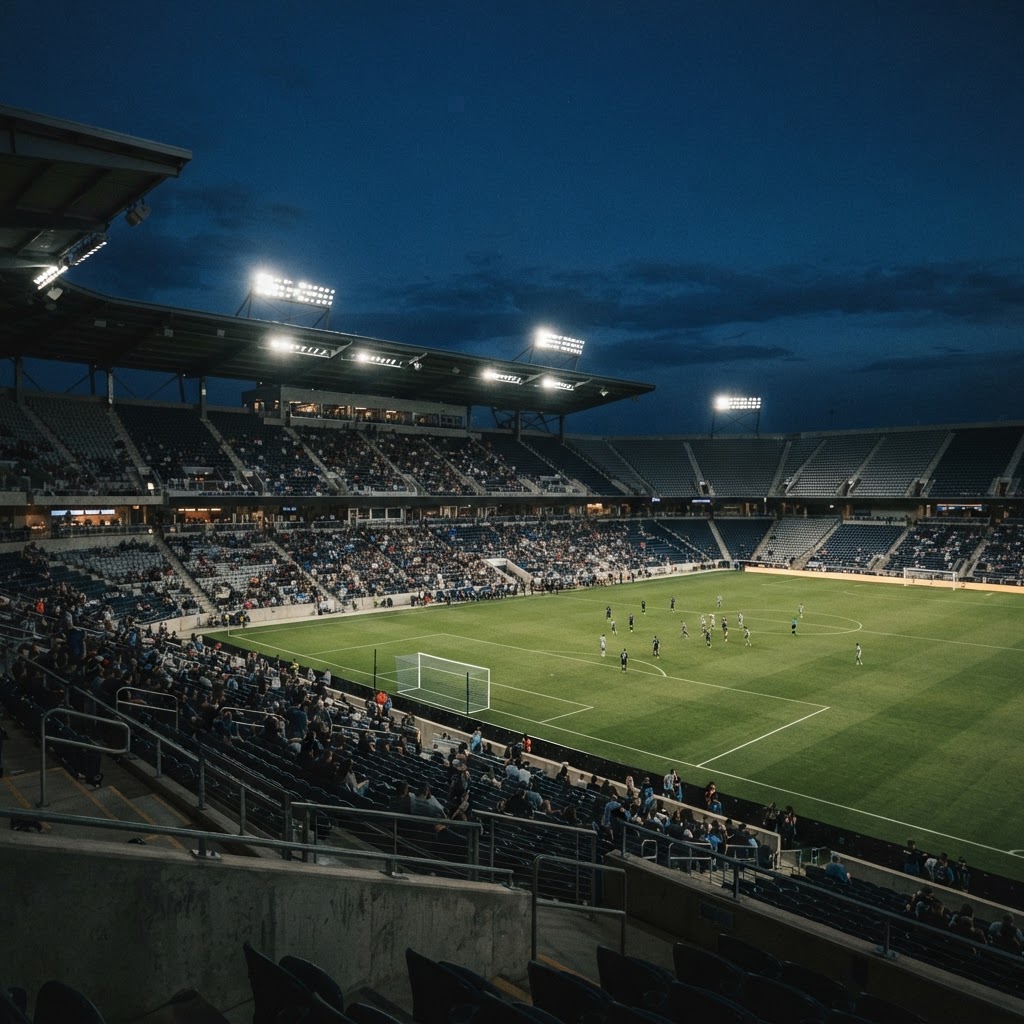
2026 USL Championship Attendance: Down 7.5%
The USL Championship average fell to 5,148 per match while MLS and USL League One grew. We checked every club figure and found venue control, not market size, predicts crowds.
Read the Report