Club Ownership
The New Ownership Model: Inside Jozy Altidore's Multi-Layered Soccer Investment Strategy
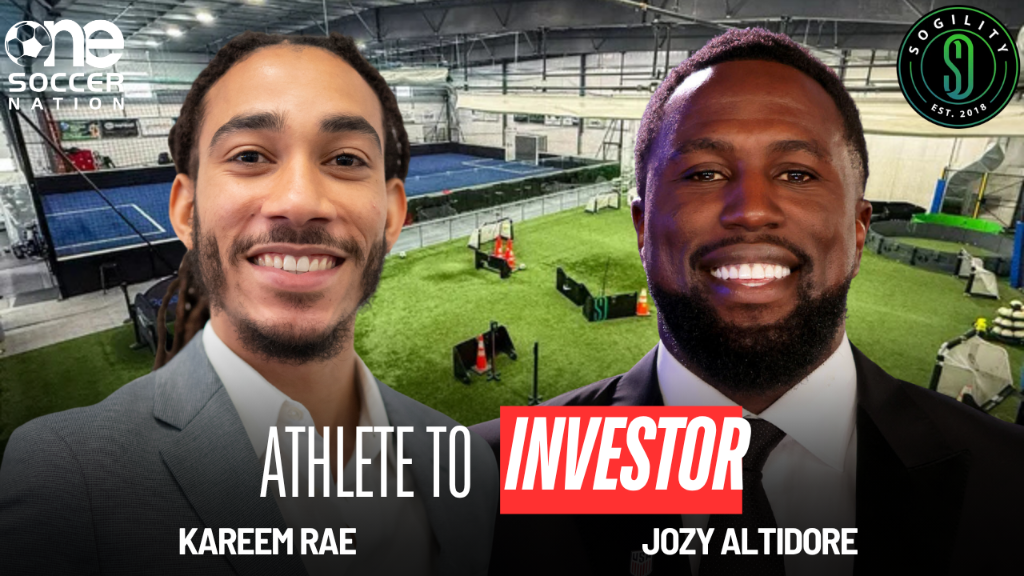
The next wave of soccer ownership is not being built by traditional executives.
It is being shaped by operators who understand the game from the inside and are now applying that perspective across capital, infrastructure, and development.
Jozy Altidore represents this shift in real time.
In a recent conversation on The One Soccer Nation (OSN) Podcast, he outlined a model that goes far beyond the typical athlete-to-investor transition. What emerges is a clear blueprint for how modern soccer assets are being built, scaled, and connected.
From Player to Portfolio Builder
Altidore's transition is not defined by a single investment. It is defined by a portfolio strategy.
His approach combines club ownership and expansion projects, technology-driven player development platforms, and early-stage, high-upside sports ventures.
This is not accidental. It reflects a broader understanding that value in soccer is no longer created in isolation. It is created across interconnected layers of the ecosystem.
As he explained, every experience across leagues and countries shaped how he now evaluates leadership, decision-making, and long-term value creation.
Investment Philosophy: Betting on People and Disruption
At the core of his strategy are two filters.
1. The Team Behind the Asset
Ideas are abundant. Execution is rare. He prioritizes strong operators, aligned cap tables, and teams capable of delivering over time.
2. Disruptive Potential
He looks for assets that can reshape a segment of the market, not just participate in it.
This is particularly evident in his investment in women's soccer and emerging markets, where structural inefficiencies create upside for early movers.
Oklahoma City: A Case Study in Modern Club Building
Altidore's involvement in the OKC For Soccer United Soccer League (USL) Championship expansion project highlights how ownership is evolving.
Key drivers behind the investment: an underserved but growing sports market, strong demographic alignment with soccer audiences, opportunity to rebuild a soccer identity from the ground up, and integration with a broader mixed-use development strategy.
This last point is critical.
Modern clubs are no longer standalone teams. They are anchors for real estate development, year-round programming, and community-driven engagement ecosystems.
As Altidore emphasized, the objective is not just to build a team, but to build a destination that generates continuous revenue and attracts new audiences.
The Bigger Bet: Ecosystem Over Asset
Where this strategy becomes differentiated is in how each investment connects.
Through his role with Sogility, Altidore is building a technology-driven player development platform designed to track player performance through data, provide structured development pathways, and expand access to training beyond traditional systems.
This creates a feedback loop: development platforms identify and nurture talent, clubs provide the professional pathway, and data strengthens scouting, recruitment, and asset valuation.
The result is an integrated system rather than disconnected investments.
Technology and the Next Talent Pipeline
One of the most important insights from the conversation is how data will reshape player development.
Sogility's model focuses on objective performance tracking, individualized training programs, and scalable access across geographies.
This has two major implications.
1. Democratization of Opportunity
Players in underserved markets gain visibility through data, not just exposure.
2. Smarter Talent Identification
Clubs can evaluate players based on measurable attributes, reducing reliance on subjective scouting.
This is a fundamental shift in how talent pipelines are built.
The 2026 World Cup Effect
Timing is central to Altidore's strategy.
With the 2026 FIFA World Cup approaching in North America, he is positioning assets to capture the expected surge in youth participation, fan engagement, and commercial investment.
His focus is clear: expand development infrastructure ahead of demand, establish market presence before competition intensifies, and scale in a controlled, sustainable manner.
This is not reactive growth. It is pre-positioned expansion.
What This Means for Investors and Operators
The key takeaway is not about one player's transition.
It is about a structural shift in how soccer assets are being built.
The emerging model includes multi-asset ownership strategies, integration of real estate and entertainment districts, technology-driven development ecosystems, and long-term positioning around global events.
For investors, this changes how opportunities should be evaluated.
For operators, it redefines what a "club" actually is.
Final Thought
The most important insight from this conversation is simple:
The future of soccer is not being built in silos.
It is being built through connected systems where ownership, development, technology, and community all reinforce each other.
Those who understand how to align these layers will define the next generation of soccer assets.
Listen to the full episode
Comments
No comments yet. Be the first to share your thoughts.